
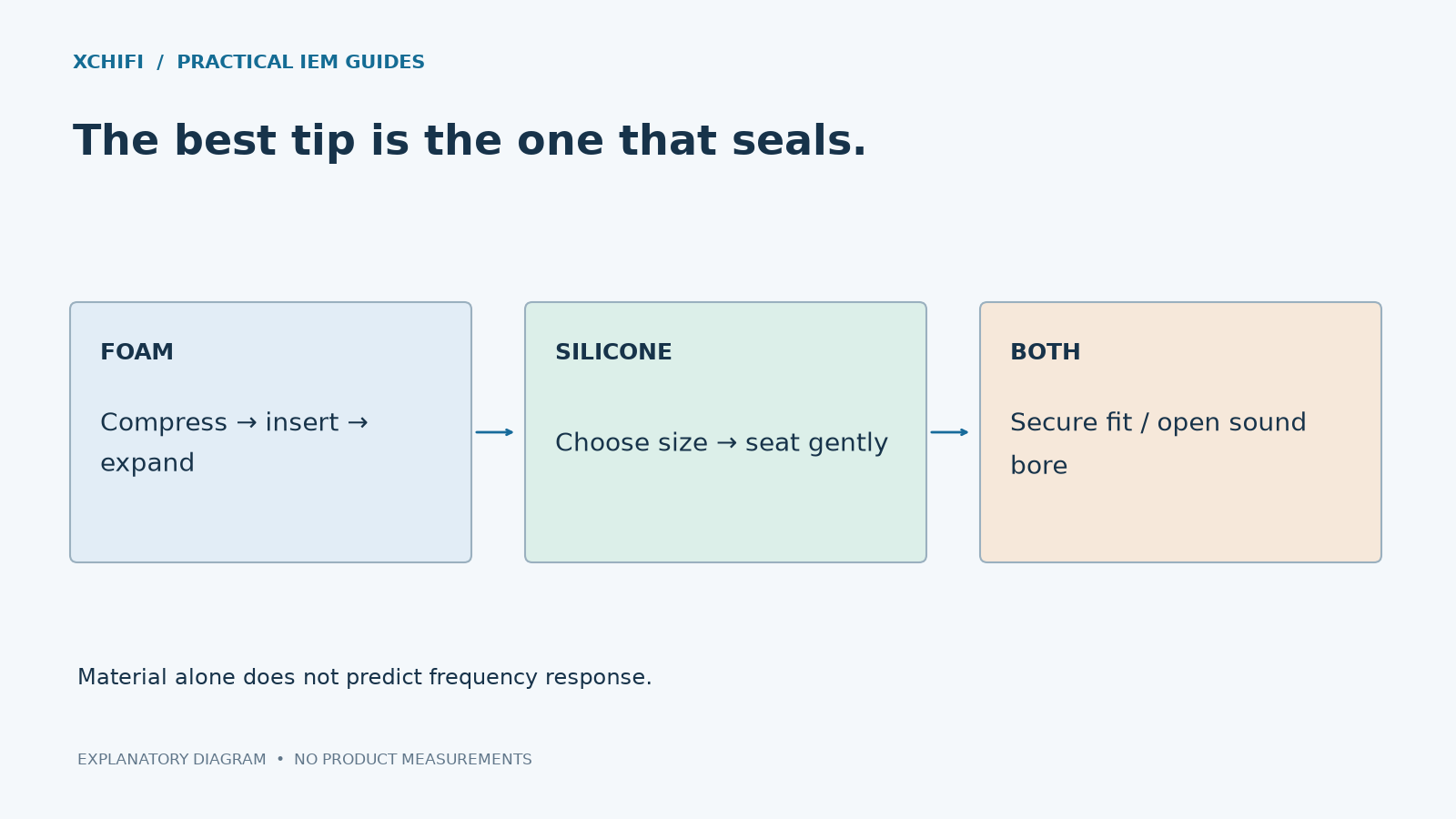
Choose the tip that stays comfortable and seals reliably. Foam is not automatically bassier, and silicone is not automatically clearer.
What changes in daily use?
Foam tips usually need to be compressed before insertion and held briefly while they expand. They can conform well, but care and replacement requirements depend on the particular foam.
Silicone tips keep their shape and are convenient to insert. Size, flange shape and flexibility determine whether they sit securely or slip. Follow the maker’s cleaning instructions; do not assume foam can be washed like silicone.
Why can a tip change the sound?
The seal, insertion depth, sound-bore dimensions and material losses can all affect the acoustic path. A leak can reduce bass. That makes restoring a seal more important than choosing a material label. Isolation also depends on fit; neither material wins for every ear.
Try this before buying several sets
- Confirm the tip fits the nozzle securely without covering the outlet.
- Try adjacent sizes at a comfortable listening level. Left and right ears may need different sizes.
- Gently move your jaw and turn your head. Bass should not disappear and the tip should not loosen.
- Stop if it hurts. A larger tip or deeper insertion is not automatically a better seal.
Replace a torn, hardened or poorly retaining tip. Do not keep a tip that can slip off the nozzle in your ear. Compare tips using the same music and volume setting, with a fresh fit each time.
Technical references: Sleeve fit and insertion