
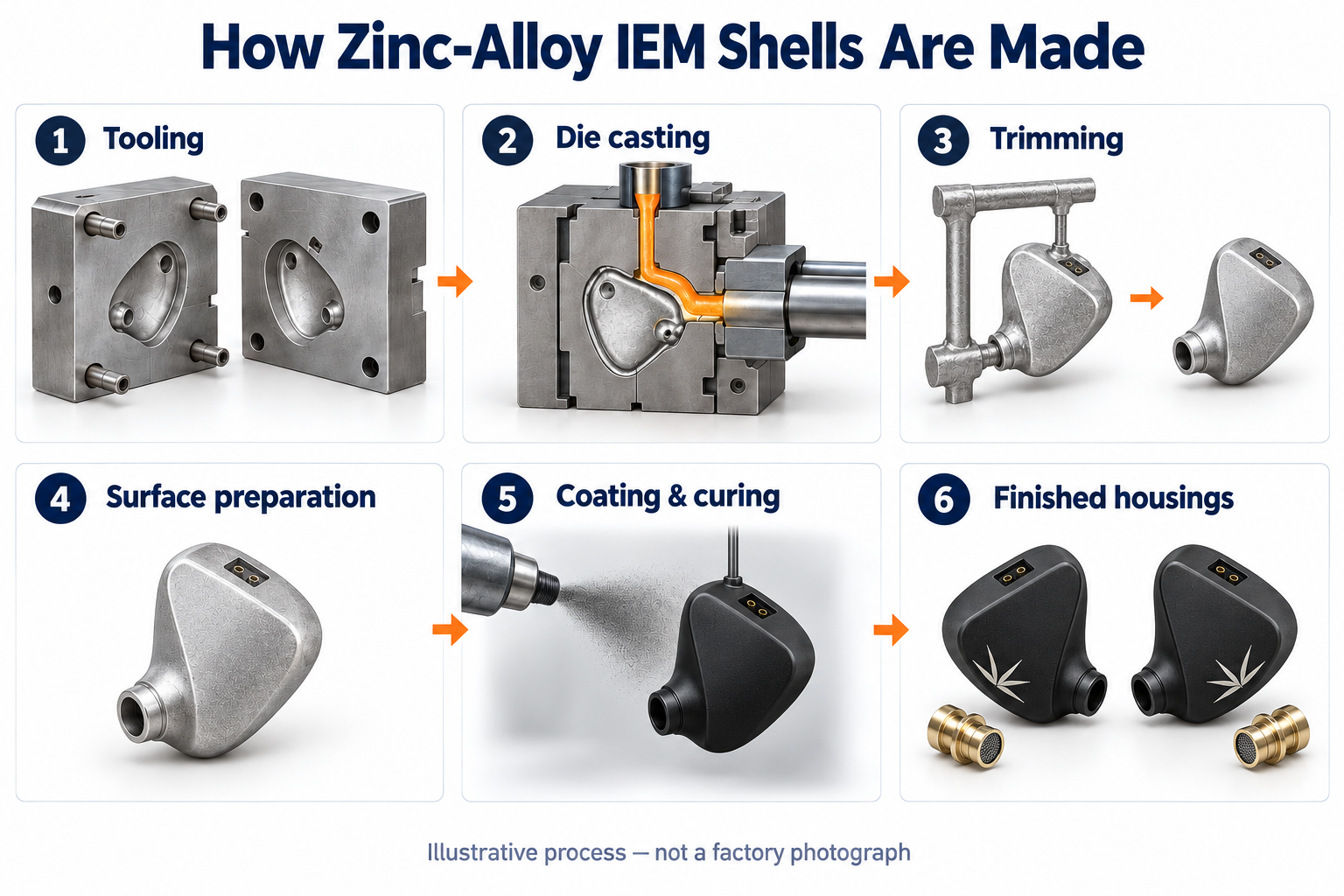
Metal and plastic IEM shells can both last for years. The material alone does not decide whether an earphone survives daily use. The more useful question is how the shell, connector, driver mount and seams work together.
What actually makes an IEM durable?
A durable IEM manages force from drops, cable pulls and everyday pressure. Look beyond the material label and check four things: shell-wall thickness, the seam between shell halves, reinforcement around the 2-pin or MMCX socket, and how securely the driver is mounted. A strong metal shell cannot save a loose socket or a poorly supported solder joint.
Metal shells: strengths and trade-offs
Aluminum, zinc alloy and stainless steel shells usually resist scratches and surface wear well. They can feel precise and premium, and a rigid enclosure can help protect the driver. The trade-off is weight. A heavier earpiece carries more energy in a fall and puts more leverage on the cable connector. Metal finishes can also chip or wear if the coating is thin or poorly prepared.
Plastic shells: light, resilient and practical
Well-designed ABS, polycarbonate or resin shells are light and can absorb impact without transmitting as much force to the internal parts. They may pick up scratches sooner than metal, but a cosmetic mark is different from a functional failure. Plastic also gives designers freedom to create complex ergonomic shapes, which can improve fit and reduce the chance that an IEM falls out.
Where IEMs usually fail first
The shell is rarely the only weak point. Cable sockets, strain relief, solder joints, nozzle filters and driver bonding are more likely to determine long-term reliability. Before buying, inspect close-up photos or teardowns for a reinforced connector, clean internal support, replaceable filters and a sensible warranty. Long-term owner reports are more useful than a material claim on a product page.
Metal vs plastic IEM shells: which should you choose?
Choose metal if you value a rigid, scratch-resistant finish and the weight remains comfortable. Choose plastic or resin if low weight, fit and impact resilience matter more. Neither choice guarantees durability. The best IEM shell is the one paired with a well-supported connector, secure driver mounting and a shape you will keep in your ears.
Quick buying checklist
- Check whether the connector sits in a reinforced recess.
- Look for consistent seams and no sharp shell edges.
- Read long-term owner reports, not only launch reviews.
- Consider replacement cables, filters and warranty support.
- Prioritize fit: an IEM that stays secure is less likely to be dropped.
FAQ
Are metal IEM shells always more durable?
No. Metal usually resists scratches well, but connector support and internal construction matter more for functional durability.
Do plastic IEM shells break easily?
Not necessarily. Engineering plastics can be very resilient, especially when the shell has sufficient wall thickness and well-designed seams.
Does a heavier IEM survive drops better?
Not by itself. Extra mass increases impact energy in a fall. Internal support and fit are more useful indicators.