
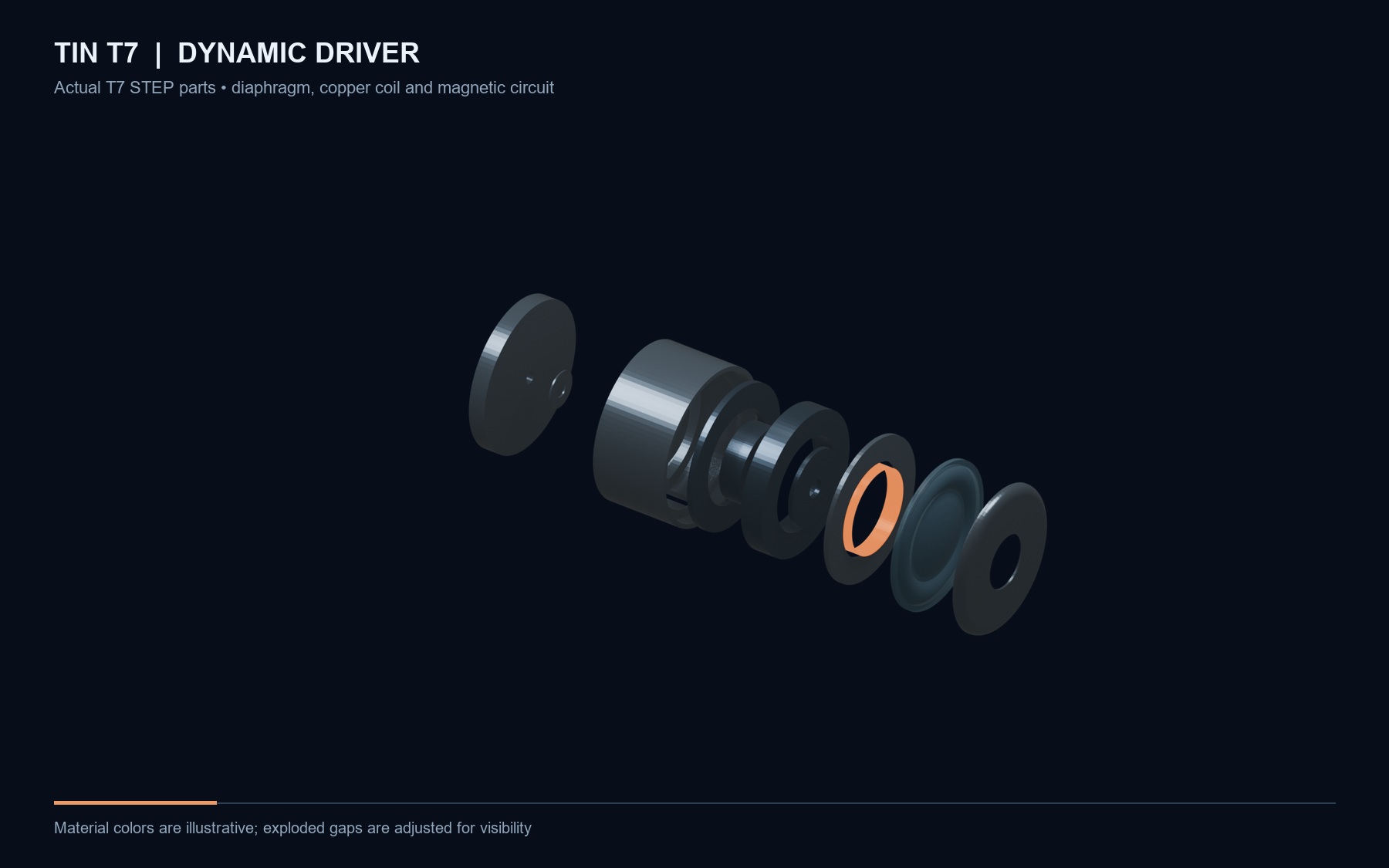
A great deal of CHIFI begins with the same DIY instinct: a listener wants a sound the market is not giving them, then decides to make it. The first pair may be a hand-tuned sample, a rebuilt shell, a cable experiment, or a small prototype shared among friends. The point is not the workshop size. The point is that the product starts with an enthusiast’s own listening question.
That route turned a hobby scene into a worldwide IEM category.
The short version: CHIFI starts with DIY. China made it possible to carry that DIY idea from a listener’s bench to a real IEM brand because the people, parts and production skills needed for the next revision are unusually close together.
CHIFI starts with DIY—and grows through an ecosystem
“CHIFI” is an enthusiast term for Chinese Hi-Fi. It covers long-running audio manufacturers, engineer-led product teams, OEM/ODM partners, specialist retailers and newer community-led brands. Their company histories differ, but the category’s energy comes from DIY: listeners treating an earphone as something they can question, modify, measure, tune and eventually create.
In the early CHIFI scene, a widely repeated industry observation is that roughly 80% of emerging brands began with some form of DIY. It is not an audited market statistic; it describes the culture. People listened, modified, compared parts, shared samples and tried to build the sound they wanted before they had a company behind them.
The more useful question is: what made it practical for a small audio idea to become a real product in China?
1. It starts with listeners who want to make, not just buy
Before there is a brand, there is usually a complaint—or an obsession.
One group wants harder, cleaner sub-bass. Another wants vocals to sit closer. Gamers care about spatial cues and long-session comfort. Some listeners prefer a relaxed treble; others want more air and edge. A reviewer’s favourite tuning can be genuinely good and still be wrong for a different audience.
This is where hobby culture matters. Forum discussion, measurement graphs, DIY cable work, shell modifications and informal listening comparisons turn vague taste into a product brief:
- What frequency balance are we trying to hear?
- Which music, game or use case is this for?
- What fit and isolation are acceptable?
- Which compromise is worth making at the target price?
A small DIY team does not need to invent every part of an IEM. It needs to make a clear set of choices and then listen critically to the result. That is the original CHIFI habit: build the sound you cannot find on the shelf.
2. DIY becomes product development when the loop gets short
The early “hand-built” stage is valuable because it exposes the real work. A prototype can reveal a nozzle resonance, a weak connector, a pressure problem, channel mismatch or a shell that looks beautiful but hurts after forty minutes.
In a mature manufacturing cluster, that feedback can become a new sample without turning into a year-long industrial project. Driver options, shells, faceplates, sockets, cables, packaging, assembly, test fixtures and finishing services are closer together. That does not make acoustics easy. It makes iteration possible.
Listener preference ↓Acoustic target and product brief ↓Prototype shell + driver + nozzle + venting ↓Measurement, listening and fit feedback ↓Revised sample ↓Small batch, quality control and warranty support
The advantage is not “cheap parts.” It is fewer hand-offs between an idea and the people who can test, change and build it.
3. Why can this happen so quickly in China?
Independent audio builders exist everywhere. But turning a DIY IEM into a commercial product is much harder when every part, supplier and production step is far away. In China—especially around Dongguan and the wider Pearl River Delta—the audio supply chain compresses that distance. Several capabilities are available in the same commercial network:
| What a young IEM team needs | Why local access matters |
|---|---|
| Drivers, magnets, diaphragms and acoustic mesh | Enables rapid acoustic experiments instead of committing to one architecture early. |
| CNC, resin, metal and injection-moulded shell options | Lets a team test fit, nozzle angle, vent position and visual identity. |
| Cable, connector and packaging suppliers | Turns a working earphone into a complete retail product. |
| Assembly, measurement and QC capability | Makes left/right matching and repeatability part of the job, not an afterthought. |
| Cross-border e-commerce and logistics | Lets a niche product reach listeners outside the local market. |
This density matters. Outside a dense audio-manufacturing network, a creator may need to source a driver from one country, machine a shell in another, assemble elsewhere, then wait weeks for each revision. That introduces freight, delay, minimum-order pressure and communication risk before a listener has even heard the sample. In Dongguan and nearby manufacturing clusters, the DIY creator is much closer to the people who can make, test and revise the product.
That is why Chinese CHIFI could grow so quickly: Dongguan’s industrial ecosystem made the feedback loop unusually compact. A DIY idea can reach a credible sample, then a small production run, at a speed that is difficult to reproduce when the supply chain is spread across the world.
4. Build your own brand through sales first
Not every future brand owner starts at an assembly bench. The other common route begins with selling other people’s audio products: a small online shop, a distribution business, a marketplace listing, or a specialist retailer serving enthusiasts. The purpose is not to remain a reseller. It is to learn the market well enough to create your own IEM brand.
Selling first gives a future founder something a prototype alone cannot provide: a live view of the market. They see what people ask before they buy, what they praise after a week, what comes back for repair, and where a price point stops making sense. Over time, that channel knowledge becomes the brief for their own brand.
This route follows a different sequence:
Sell existing audio products ↓Learn users, price bands and failure points ↓Identify an unmet listening or use-case need ↓Work with acoustic and manufacturing partners ↓Launch a brand with a clearer product brief
The two routes meet at the same destination: your own earphone brand. It still has to make a product that sounds consistent, fits well and earns trust.
5. Selling teaches you what a graph cannot
A frequency-response graph is valuable, but it cannot tell a seller everything. Sales channels see the questions that arrive before purchase and the problems that appear after delivery:
- Which price points make people hesitate?
- Which fits are returned most often?
- Which cable failures create support tickets?
- Which tuning descriptions match what buyers actually hear?
- Which regions care most about tax, delivery speed or replacement parts?
That knowledge is commercially powerful. A retailer or distributor that starts by connecting niche Chinese products with overseas listeners may later have enough market knowledge to create, incubate or own brands. The advantage is not simply access to buyers; it is a working understanding of the gap between what people say they want and what a product actually has to deliver.
That model can work well, but it carries a responsibility: the relationship between a store, a brand and a reviewer should be disclosed clearly. Good marketing brings a product to the right audience; it should not replace measurements, honest listening or after-sales support.
6. What separates a real brand from a fast launch
Low barriers to sampling do not mean low barriers to building trust. The brands that last have to solve the less glamorous work:
- Repeatable tuning. A product must sound broadly consistent from one unit to the next.
- Quality control. Channel matching, connector fit, mesh placement, driver defects and cosmetic finishing all affect reputation.
- A clear audience. “Good for everyone” is rarely a useful brief. A focused sound and use case is easier to design and communicate.
- Service after the sale. Replacement parts, warranty handling and honest stock information decide whether a first purchase becomes a recommendation.
- A reason to improve. A new faceplate or extra driver count is not automatically a better IEM. The update must solve a real problem.
This is the point where many “hand-built” ideas stop being hobby projects and become companies.
7. From a DIY hobby to a scalable audio brand
One Chinese IEM company offers a useful public example. Its founder first entered audio as an enthusiast, then spent student years selling DIY headphone-amplifier accessories and writing reviews. The team’s early earbud used a CNC brass housing and a 6 μm PET diaphragm; the product reportedly sold more than 10,000 units in about two years. A formal company followed. The point is not the name: it is the sequence from personal obsession, to a product people wanted, to a repeatable business.
The company later developed industrial design, R&D, mass production and multi-channel marketing. Public reporting describes a rise from early annual output measured in the hundreds of thousands of RMB to around RMB 300 million in annual sales. That is the important transformation: DIY does not disappear; DIY curiosity becomes an organisation able to repeat its ideas at scale.
The lesson is practical. A creator needs more than a good first sample. They need a stable acoustic target, a supply chain that can repeat it, quality control, a clear audience and a route to market. Dongguan is where many of those production links become accessible; a brand can keep its own point of view while using a mature manufacturing ecosystem.
8. From one product to a family of listening preferences
The strongest lesson from the CHIFI story is not that every listener needs a flagship. It is that listeners are not one market.
A bass-forward commuter IEM, a vocal-focused set, a gaming-oriented design and a neutral studio reference can all be valid products. The mistake is to treat one reviewer’s preferred target as the universal answer.
Small-batch development gives a community another option: form a group around a clearly stated preference, then build toward that preference with transparent trade-offs. That is more useful than pretending that one tuning wins for every ear.
9. Your DIY idea can become the next product
The next generation of CHIFI can go beyond the old pattern of factory → brand → distributor → retailer → listener. Community members can contribute earlier: identifying needs, comparing targets, testing samples, explaining use cases and receiving credit for useful work.
That does not eliminate engineering. It gives engineering a better brief.
At XCHIFI, the goal is to make that loop visible: help listeners understand the trade-offs, let communities describe the sound they actually want, and connect those ideas with people who can test and build them.
Join XCHIFI: turn your starting point into your own brand
Whether you start with DIY or sales, your brand begins here. Join XCHIFI to turn that starting point into your own IEM brand.
XCHIFI helps you move from idea to product: define the audience, identify the sound preference, write the tuning brief, explore parts and production options, test the trade-offs, and build a community around the finished IEM.
If you have the ability to reach listeners, you do not need to wait for a big company to choose your next product. Join XCHIFI. Build your own brand with us—or co-create an IEM with a community that shares your listening preference.
Frequently asked questions
Why are many Chinese IEMs so affordable?
Proximity to a large electronics supply chain can reduce iteration time, shipping between suppliers and duplicated layers of distribution. Price still depends on drivers, materials, yield, quality control, service, logistics, taxes and marketing—not only factory cost.
Does CHIFI mean every product is made by the same factory?
No. “CHIFI” is a broad community label, not a single company or manufacturing arrangement. Brands can differ widely in design ownership, engineering depth, supplier relationships and quality control.
Is a DIY-origin IEM automatically better?
No. DIY is the starting point, not the finish line. A commercial product still needs reliable tuning, safe assembly, measurement, consistency and service.
Can a retailer create a credible audio brand?
Yes, if it develops genuine product expertise and is transparent about commercial relationships. Channel insight can improve a product brief; it does not remove the need for independent evaluation and accountable support.