
Buying another IEM can be disappointing when it changes little about the music you already enjoy. If your current pair has enough bass, comfortable vocals and a good fit, a newer model with a similar response may offer little reason to spend more.
That frustration is often blamed on the Harman target. But the discussion gets muddled when every recent tuning is called “Harman.” CrinEar’s Daybreak, for example, uses IEF Preference 2025. Crinacle describes that target partly in terms of his own taste. Before deciding whether to trust it, we need to look at what he actually claims.
Is the Harman target overrated?
It is easy to overstate what a target proves. That does not make the underlying research worthless. Harman’s 2017 in-ear work involved 71 listeners and 30 headphone models; its subsequent statistical model linked preference ratings to deviations in measured response. This is evidence for a relationship between frequency response and preference under the study conditions—not a promise about every buyer. Source: Olive, Welti and Khonsaripour, AES paper 9878.
Variation also appears within the research. A 2024 study of five in-ear targets on the B&K 5128 involved 32 listeners and found two preference groups. The smaller group favoured alternatives with less bass and more treble than those preferred by the larger group. That small study should not be treated as a census of all listeners, but it shows why a group average cannot settle an individual purchase. Source: Sean Olive, AES paper 10193.
A target helps describe tonal choices. It becomes less useful when closeness to a line is presented as proof that everybody should prefer the result. A score cannot tell you whether a nozzle will fit comfortably or whether a cable will last.
Always identify the target version and headphone type. An over-ear target, an in-ear target and a response translated to another measurement fixture are not interchangeable labels.
Why do modern IEMs sometimes seem to sound alike?
If your shortlist contains products with similar broad bass, midrange and treble balances, buying another may produce a smaller tonal change than the advertising suggests. That is a plausible explanation for upgrade disappointment; it does not demonstrate that the entire market has become identical.
There are other possibilities. You may repeatedly choose the same recommended tuning, compare products with different tip seals, or expect a new driver configuration to transform familiar music. Before blaming a target, separate these questions:
- Similarity: is the new earphone offering essentially the balance you already own?
- Preference: would you actually enjoy more warmth, less vocal prominence or a different bass balance?
- Usability: is the problem fit, cable noise or isolation rather than tuning?
- Shopping fatigue: are repeated launches more tiring than your current earphones?
Here, “Harman target fatigue” means boredom with a buying narrative or a familiar tonal style. It is not a diagnosis, and it should not be confused with physical discomfort during listening.
Does CrinEar use Harman tuning—and is it trustworthy?
The brand’s own product pages describe more than one approach. The first step in evaluating CrinEar is to read the specific model’s claim rather than give the entire brand a single curve label.
| Model | Published tuning direction | What it establishes |
|---|---|---|
| Daybreak | IEF Preference 2025; development with a B&K 5128. | A named design reference, not proof of universal preference. Official page |
| Project Meta | Tilted diffuse-field response with additional bass. | An explicit tonal direction, distinct from simply claiming a Harman match. Official page |
| Nightfall | Warm-leaning balance and focused sub-bass; integrated machined acoustic structure. | A tuning and construction description. Claimed audible benefits still require evaluation. Official page |
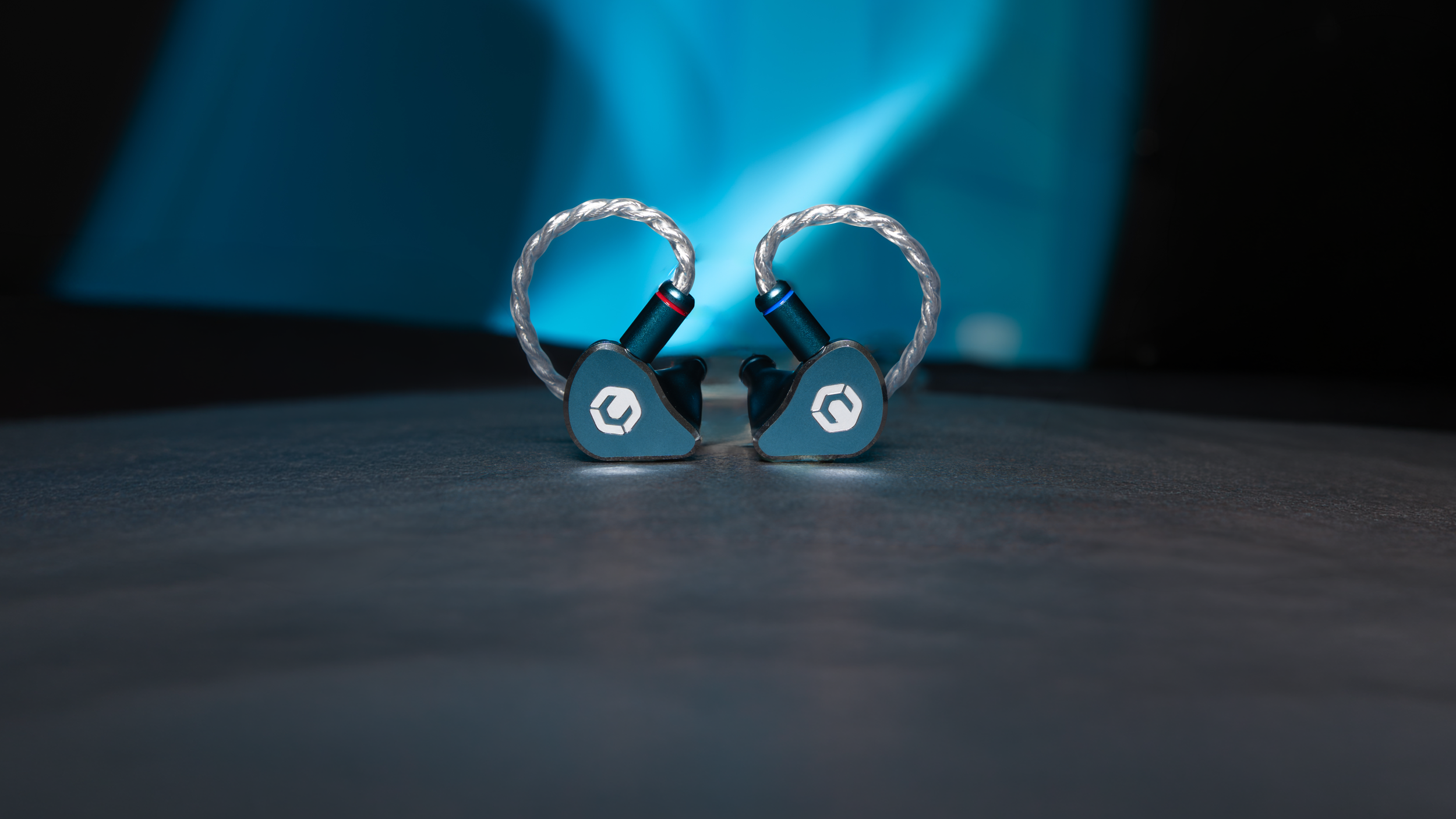
Crinacle’s own caveat is more useful than a slogan
In his explanation of IEF Preference 2025, Crinacle explicitly presents its bass and treble choices as his personal preference and rejects the idea that it is perfect for everyone. He also encourages readers to explore their own adjustments. That transparency is a positive signal: it provides a preference you can compare with your own, rather than a requirement to agree. Read his original explanation and caveats.
Good marketing and useful engineering can coexist
CrinEar is presented as a brand by Crinacle. In our analysis, connecting an established reviewing identity with clearly named targets gives its products a readily understandable story. That is a marketing advantage. Calling someone a “marketing genius,” however, would be an opinion about presentation—not an acoustic finding.
A founder’s explanation is also a manufacturer’s statement when it concerns the founder’s products. Read it for design intent, then look for independent checks of retail units, measurement methods, comfort and reliability. Commercial involvement does not make a claim false; it makes source attribution especially useful.
CrinEar earns consideration by explaining its tuning choices. Whether that translates into a worthwhile purchase depends on the particular product and the listener. Claims about resolution or coherence need listening and measurement evidence beyond the name of the target or test fixture.
What should you check before trusting an IEM graph?
A measurement fixture is a model of an ear, not your individual ear. Brüel & Kjær explains that the 5128 uses a more human-like ear-canal design and acoustic loading across a wider frequency range than traditional systems. Those improvements help measurement; they do not turn one fixture into every listener. Source: Brüel & Kjær’s explanation of high-frequency HATS.
| Question | Why it matters |
|---|---|
| Which fixture and target version? | Prefer comparisons within one documented measurement system. Similar-looking graphs from different rigs are not automatically equivalent. |
| Which tips, insertion and normalization? | A comparison needs consistent conditions and clearly stated processing. |
| How many samples and reseats? | One attractive trace does not establish production consistency or fit repeatability. |
| Who provided the sample? | Purchase, loan and manufacturer supply are useful context. Disclosure is a starting point, not a verdict. |
| What does the graph leave out? | A single frequency-response trace cannot establish comfort, durability or the entire ownership experience. |
Two products sharing a target can still differ in their actual response and physical design. Conversely, a different shell material or driver count does not by itself prove an audible improvement. Our TINHIFI T2 vs CrinEar Nightfall analysis discusses the distinction between a construction feature and demonstrated acoustic performance.
How to stop chasing target curves and enjoy your IEMs
Before placing another order, work through the problem with the earphones you already own:
- Write down one problem. “Vocals feel too forward on my favourite albums” is a more useful brief than “I need the newest tuning.”
- Make fit repeatable. Try the supplied tips and check whether the seal remains stable before judging bass balance.
- Compare at similar perceived loudness. Use familiar music and a comfortable level. If practical, have someone switch the options without telling you which is playing; approximate matching is still not a controlled laboratory comparison.
- Try modest EQ before another purchase. Change one broad region at a time and compare with EQ disabled. Leave enough digital headroom for boosts. Avoid aggressive corrections of narrow treble peaks based on someone else’s ear measurement.
- Keep a short listening note. Record what changed and whether you still prefer it after several sessions. You do not need to accept a reviewer’s vocabulary to describe your preference.
- Buy only for a named benefit. Better fit, a useful tonal alternative or a needed feature can justify an upgrade. A new release date alone cannot.
A USB-C connector does not automatically mean adjustable EQ. Confirm that the particular DAC or DSP product supports the controls you need. Our USB-C EQ & DSP guide and acoustic development guide explain the design choices behind those features.
What this means for community-designed earphones
A useful community design brief starts with a group’s listening needs: stronger bass at everyday levels, a less forward vocal balance, a smaller shell, or a clear price limit. The development question becomes whether a repeatable design can meet that brief.
These are the kinds of choices we want listeners to shape through XCHIFI’s planned earphone co-creation platform. You can read about the design process or create an account while development continues. Online customization and crowdfunding are not yet open. Email updates are optional.
Harman target and CrinEar tuning: common questions
Is the Harman curve bad for IEMs?
No blanket verdict is justified. It is a useful preference reference. Whether a particular implementation suits your ears and music remains an individual decision.
Is IEF Preference 2025 the same as Harman?
No. They should not be used as interchangeable labels. Compare the named versions on the appropriate measurement system, then assess which tonal direction you enjoy.
Does a high target score mean an IEM is better?
Only within the definition and limits of that scoring method. It is not a complete product rating, and it cannot guarantee your preference.
Can I dislike a scientifically informed tuning?
Yes. Research can inform your choices without dictating them. Keep the evidence, identify your preference and let the two work together.
Sources checked September 19, 2026. This article examines published research and product claims; we have not conducted a CrinEar listening test. XCHIFI is connected to TINHIFI.