
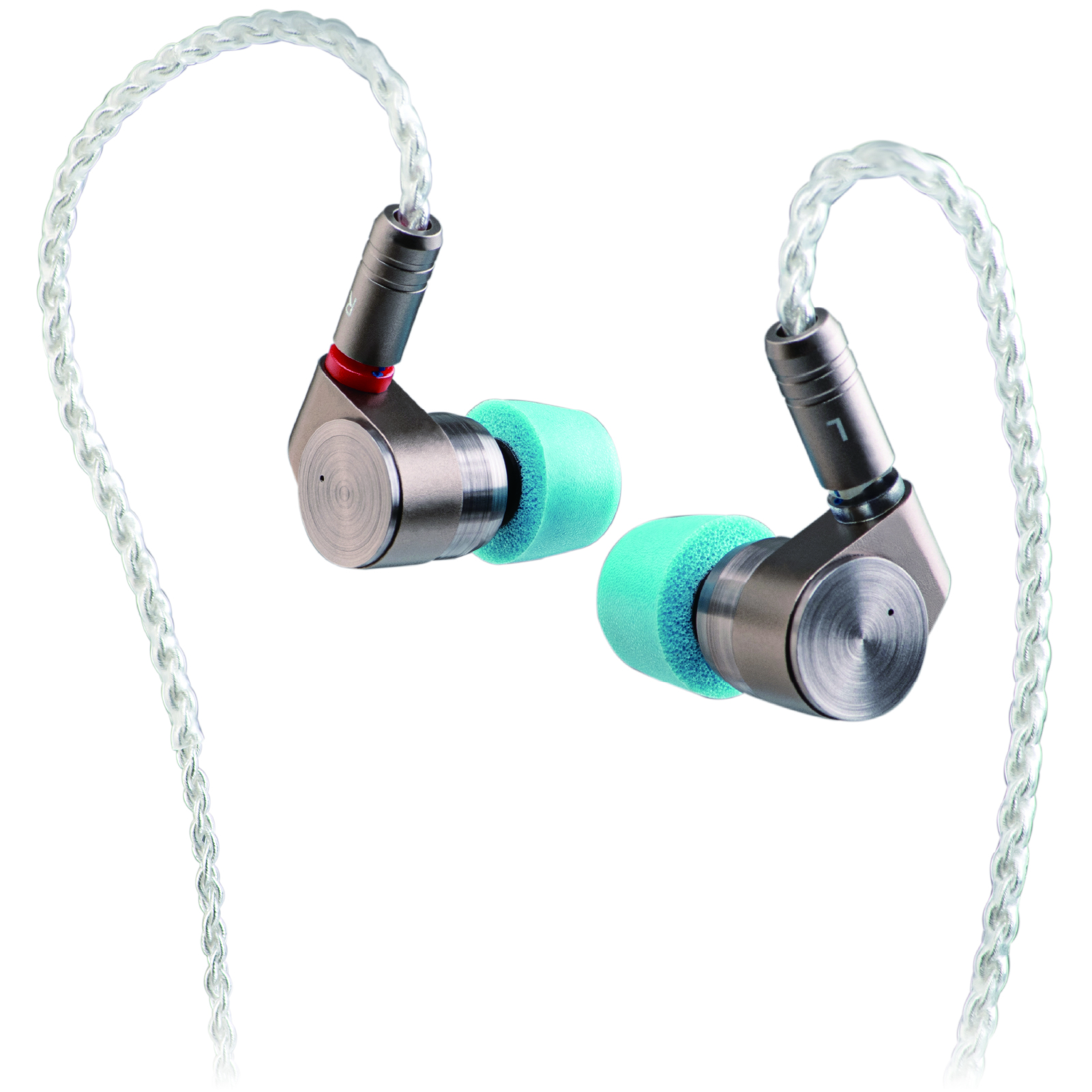
TINHIFI T2 and CrinEar Nightfall both use two dynamic drivers, but driver count alone does not explain their sound. The classic T2 is associated with restrained bass and a comparatively lean balance. Nightfall is designed around a full-range driver with additional bass control. The useful comparison is how each complete system is tuned—not whether one driver arrangement automatically wins.
XCHIFI is connected to TINHIFI. This is a source-based engineering analysis, not a level-matched listening test or an XCHIFI measurement of these two products.
TINHIFI T2 vs CrinEar Nightfall: know which T2 you mean
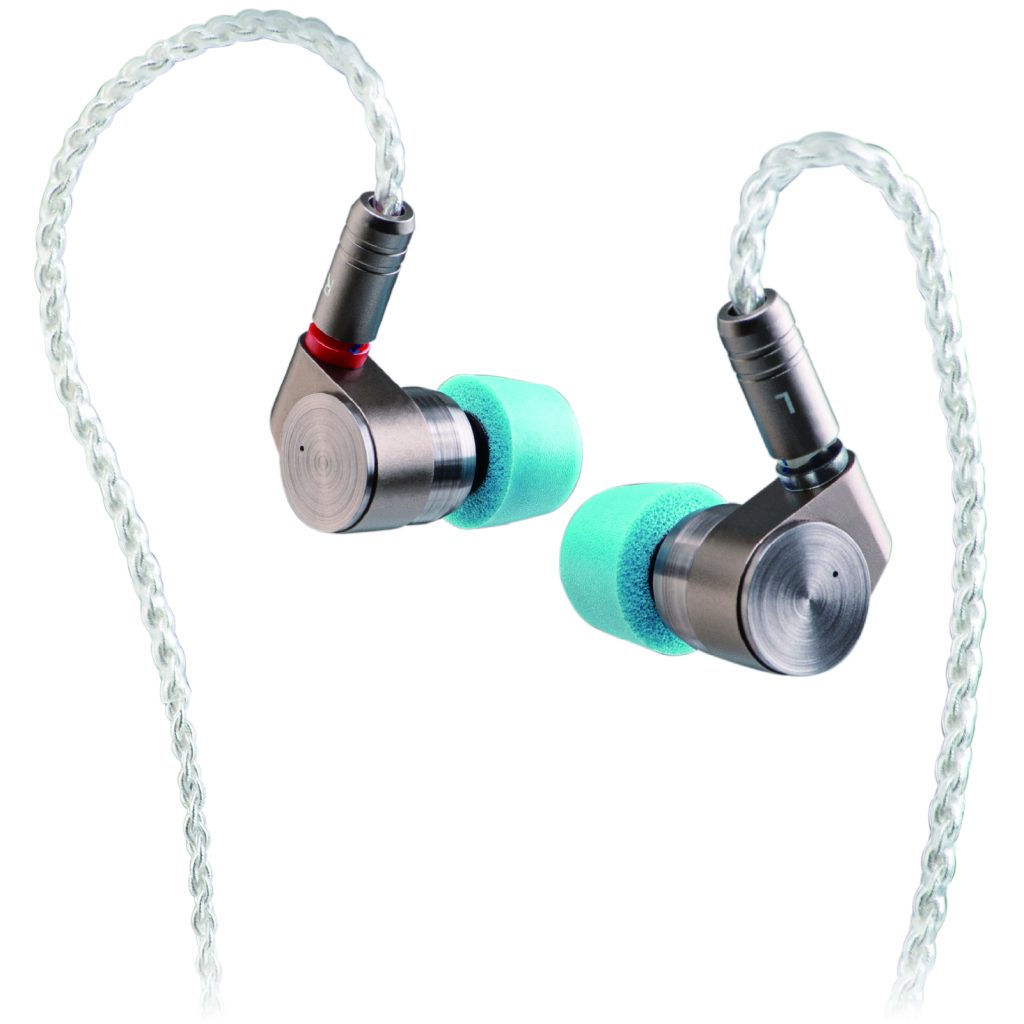
T2, T2 Pro, T2 Plus, T2 DLC and T2 MKIII are not interchangeable model names. Here, “classic T2” refers to the original dual-dynamic design discussed in historical reviews. TINHIFI now also lists a T2 2-Pin revision. Older listening and measurement results should not be presented as fresh tests of that current revision.
| Item | TINHIFI T2 | CrinEar Nightfall |
|---|---|---|
| Driver roles | Classic specification: 10 mm woofer + 6 mm tweeter | 10 mm full-range + 8 mm bass-control driver |
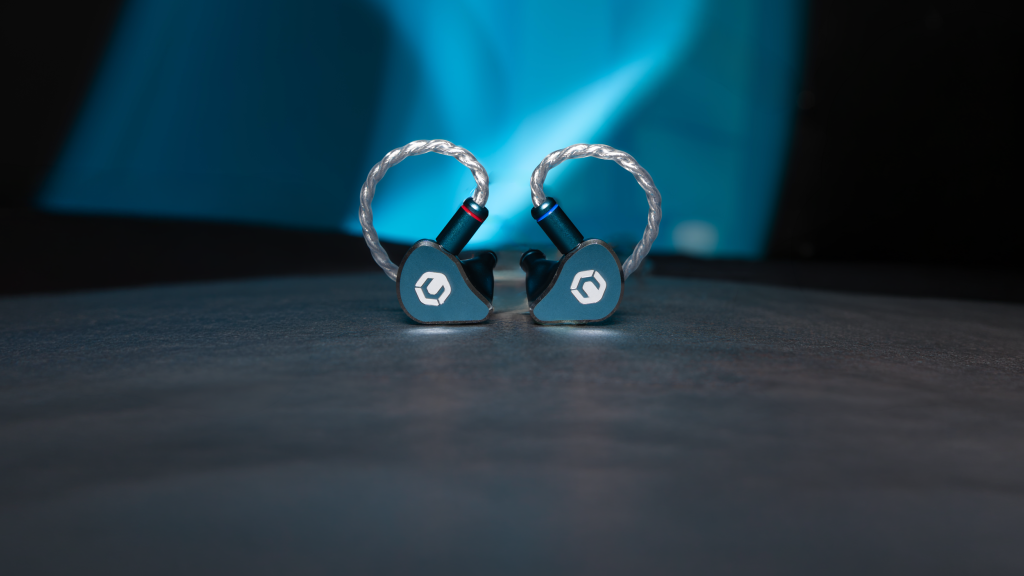
| Acoustic construction | Dual dynamic; detailed internal paths and crossover values are not established by the sources used here | MDM: acoustic structure machined into the shell |
| Shell | Metal housing | CNC-machined, anodised aluminium |
| Connection | Historical MMCX; current official listing is T2 2-Pin. Match the revision before buying a cable. | 0.78 mm 2-pin; interchangeable 3.5 mm / 4.4 mm plugs |
| Price reference | Current official T2 2-Pin listing: US$49 | Official listed price: US$99.99 |
Sources: Linsoul’s historical T2 technical sheet, the current TINHIFI listing linked above, and CrinEar’s Nightfall specifications. Prices are listed references, excluding any checkout-specific taxes or shipping.
Two dynamic drivers can have different jobs
A woofer-and-tweeter description suggests a division of work across frequency regions. A full-range driver with a bass-control driver suggests a different integration strategy: one driver covers much of the audible band while the other modifies low-frequency behaviour. Neither label supplies the actual crossover transfer functions.
CrinEar says Nightfall’s Kingtone-built driver system was developed for its MDM platform, with internal acoustic pathways integrated into the housing instead of traditional tubes or modular chambers. That is a manufacturer design description—not independent proof of lower distortion or better phase alignment.
For T2, the published 10 mm / 6 mm specification is useful, but it does not prove that a 6 mm driver sits “inside” a 10 mm diaphragm, nor that their acoustic centres coincide. A verified section drawing or teardown would be needed to describe that geometry precisely.
Is coaxial inherently better than side-by-side?
No. Sharing an axis can simplify some geometric relationships, but it does not remove the phase shifts caused by a driver’s mechanical response, electrical filtering, acoustic loading or depth offset. Conversely, physically separated drivers can sum smoothly when their transfer functions and operating ranges are designed together.
An IEM also sends sound through very small cavities and outlets into a loaded ear canal. A drawing of two loudspeakers radiating freely into a room is not sufficient evidence for how two drivers behave inside an earphone. COMSOL’s driver-modelling material describes coupling electrical, mechanical and acoustic behaviour; that coupled system is the relevant engineering problem.
What phase and sound-path length actually tell us
At one frequency and one observation point, two coherent pressure contributions add as complex quantities:
|p_total|² = |p1|² + |p2|² + 2|p1||p2| cos(Δφ)
Equal amplitudes in phase give twice the pressure, or approximately +6 dB relative to either contribution alone. Equal amplitudes 180 degrees apart can cancel in an ideal model. These are conditions at a frequency, not automatic properties of “coaxial” and “side-by-side” housings. Real crossover bands generally contain unequal, frequency-dependent contributions.
A numerical example: a 5 mm path difference
Using a sound speed of 343 m/s, an extra 5 mm corresponds to about 14.6 microseconds. Pure propagation delay of that size gives roughly 5.2 degrees of phase difference at 1 kHz, 26.2 degrees at 5 kHz and 52.5 degrees at 10 kHz. These are calculated examples; neither product’s sound-path difference has been measured here.
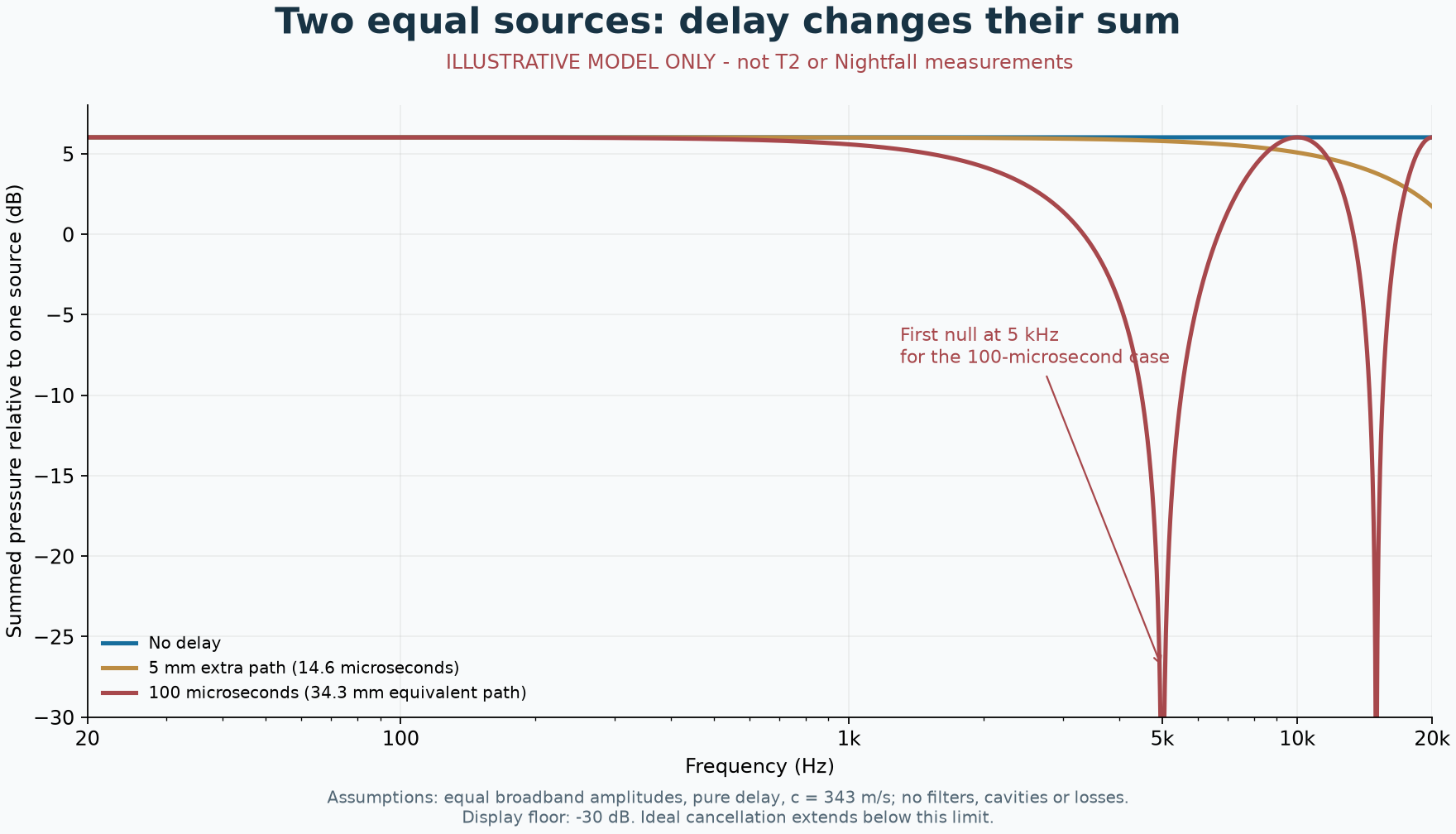
For equal broadband sources with delay τ, the first ideal cancellation is at 1/(2τ); subsequent nulls are spaced by 1/τ. A 100-microsecond assumption therefore gives a first null at 5 kHz and corresponds to 34.3 mm of free-air path difference. There is no basis here to assign that delay to Nightfall.
A bass-control driver’s upper-frequency contribution may also be attenuated. If it contributes little at a high frequency, equal-level broadband comb-filter predictions are a poor model there. Driver position alone cannot tell us the depth—or even the presence—of an audible cancellation.
Acoustic chambers matter as much as the driver layout
For IEM development, the front cavity, rear volume, nozzle and vents form part of the acoustic system. A small enclosed air volume behaves approximately like a compliance at sufficiently low frequencies; air moving through a narrow path contributes acoustic inertance, while damping introduces resistance. The dimensions and losses affect both amplitude and phase.
COMSOL’s acoustic impedance explanation describes this resistance–compliance–inertance approach. It is a useful framework, not a substitute for model-specific dimensions. A machined chamber still has acoustic resonances; a separate tube is not inherently incoherent.
Fit adds another variable. A leak around an ear tip changes the acoustic load and can reduce low-frequency output. COMSOL’s earbud leakage model examines sensitivity to leak size. Before judging bass or applying EQ, establish a comfortable and repeatable seal. Blocking vents can change tuning and pressure behaviour, so it is not a neutral comparison method.
Explore the new Acoustic Chambers and Acoustic Development sections for this engineering perspective.
What the available sound evidence says
In his 2019 T2 impressions and measurements, Crinacle described the original T2 as well tuned toward neutral, with restrained lowest sub-bass and limitations in imaging. The accompanying measurements used an IEC 60318-4-compliant system with 1/12-octave smoothing. This is historical evidence for the reviewed T2 sample, not a measurement of today’s T2 2-Pin stock.
David Becker’s September 2026 Nightfall review at Prime Audio describes elevated sub-bass, controlled mid-bass and relatively relaxed treble. He discloses a brand-supplied review sample and publishes a frequency-response graph. Those observations are his listening impressions; the review is not a direct T2 comparison.
Our inference: someone seeking more low-end weight than the classic T2 is likely to find Nightfall’s intended balance more relevant than the question of driver alignment. Someone who likes a leaner presentation may not consider extra bass an upgrade. Neither inference is a measured head-to-head verdict.
Why there is no merged T2–Nightfall measurement graph here
A defensible overlay needs compatible fixtures, calibration, insertion conditions, normalization and identified product versions. Aligning two screenshots at 1 kHz does not make their measurement systems equivalent. Brüel & Kjær explains why older 711-type couplers and newer wideband artificial ears differ, particularly toward the top of the audible range. Read each linked graph in its own measurement context.
Watch: Prime Audio’s Nightfall review
Creator: Prime Audio Reviews. Watch the original video. Nightfall review, not a direct T2 comparison.
DAC choice and USB-C EQ: what can change?
Nightfall is specified at 9 ohms and 104 dB/mW at 1 kHz. A low nominal impedance makes source behaviour worth checking: output resistance and the earphone’s impedance versus frequency form a voltage divider. Without a full impedance curve, we cannot calculate the resulting tonal change from the nominal figure alone. See Texas Instruments’ headphone-amplifier design reference for output-stage and load considerations.
Likewise, a balanced connector is not a guarantee of better sound. Relevant questions include output noise, available voltage and current, clipping and channel balance at the level you actually use. Historical T2 sensitivity figures without a clear reference unit should not be compared numerically with a dB/mW specification.
USB-C describes the connection; it does not guarantee adjustable EQ. An active USB audio adapter needs conversion and amplification, while device-side parametric EQ requires suitable DSP or firmware support. Host-side EQ is another option. Boosting an EQ band consumes headroom, so reduce preamp gain to avoid clipping; EQ cannot reliably fix poor fit or a deep acoustic cancellation. Analog Devices discusses DSP gain and output clipping.
Our DAC Development and USB-C EQ & DSP sections separate these electronics questions from the acoustic design itself.
Which earphone makes more sense for you?
- Consider T2 if: its lower listed price and the classic model’s restrained-bass reputation match your priorities. Check the exact revision, connector and seller’s return terms.
- Consider Nightfall if: you want to explore a warmer, sub-bass-oriented balance and its fit and budget suit you. The architecture is interesting, but architecture alone is not a listening result.
- If you already enjoy T2: identify what you want to change—bass quantity, comfort, cable connection or treble balance—before treating a newer two-driver design as a necessary upgrade.
Frequently asked questions
Does a 10 mm + 8 mm system outperform a 10 mm + 6 mm system?
Driver diameters do not establish frequency response, distortion or preference. Their roles, acoustic loading, filtering and implementation matter.
Does coaxial mean perfect phase alignment?
No. Sharing an axis does not eliminate phase shifts within the drivers or their electrical and acoustic paths.
Can EQ turn T2 into Nightfall?
It may move broad tonal balance in a similar direction, but without compatible measurements it is not possible to prescribe a verified matching preset. EQ also does not duplicate fit, isolation or maximum clean output.
What should an OEM / ODM brief specify?
Define target response, fit constraints, allowable variation, source compatibility and validation conditions. “Two dynamic drivers” is a component count, not a complete product requirement. Discuss an earphone development brief.
Revision note: This update replaces earlier unsupported claims of measured pressure fields, guaranteed coaxial phase alignment and product-specific comb filtering with attributed sources and a clearly labelled calculation.