
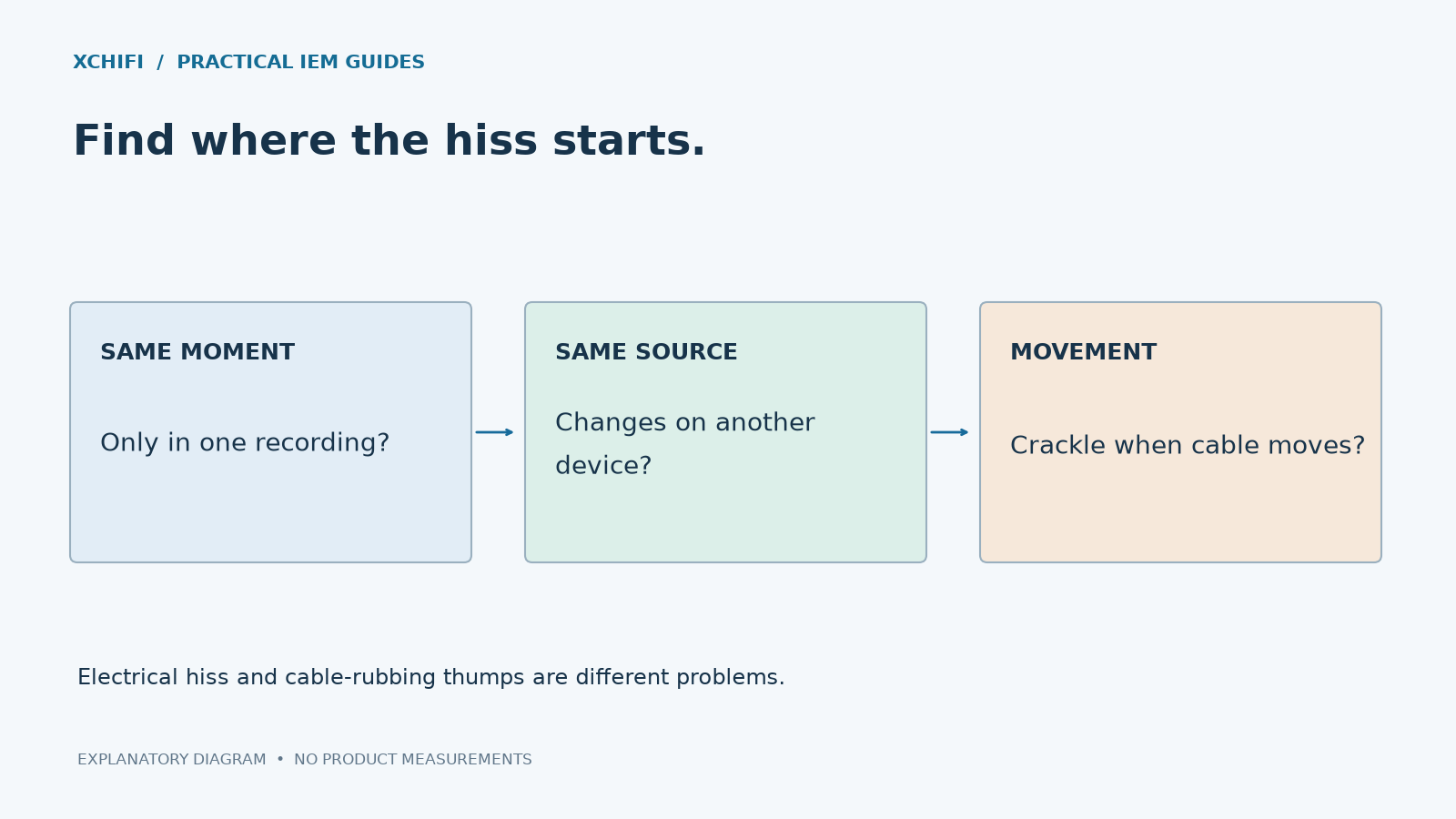
Hiss often comes from the electronics feeding the IEM. Sensitive earphones can make a source’s noise floor easier to hear. Low impedance alone does not explain every case.
Three checks worth doing
- Change the recording. Hiss at the same point in one track may be in the recording. Compare another clean recording at a low level.
- Change the source. Try another compatible phone output or dongle. A quiet result there points toward the original source or its connection.
- Try low gain. If your amplifier offers it, start at low volume and select the lower gain. It may improve the usable volume range and noise performance; the effect depends on the circuit.
Pausing music is useful, but not conclusive: some devices mute their output automatically when playback stops. Silence while paused does not prove the amplifier is equally quiet during playback.
Hiss, buzz or a loose contact?
A steady shhh is different from buzzing that changes with charging, and from crackling when a connector moves. If charging seems related, compare battery operation. Re-seat plugs with playback stopped and inspect for damage.
If you do replace the source, look for documented low output noise and sensible gain for sensitive IEMs—not merely more power. An attenuator may help, but its impedance can interact with an IEM and change the response. Check compatibility before buying one.
Technical references: Sensitivity and source noise