

A good pair of IEMs does not become bad when its replacement launches. New earphones may improve comfort, durability or acoustic performance. They may also simply offer a different sound—one you like less.
That does not mean older earphones are always better. It means age is a poor shortcut for judging sound.
Earphones are not a CPU upgrade
A processor can be compared by how quickly it completes a defined task. With earphones, some improvements are measurable, but “more enjoyable” is not one universal number. Frequency response, distortion, fit and personal preference all matter.
A newer IEM might deliver cleaner output at high levels, yet bring no audible benefit at the level you use. Another might have a different frequency response that you immediately prefer. Those are different kinds of improvement.
Why can a new IEM sound worse to you?
Start with tuning. More upper-midrange energy can bring vocals forward but become tiring for some listeners. More bass can add weight while making other parts of a recording less prominent. A redesign may be a deliberate change of direction rather than a correction of a fault.
Then check fit. A new shell, nozzle angle or insertion depth can change comfort and the seal in your ears. Poor sealing can reduce bass. An excellent driver cannot compensate for an unsuitable fit.
Finally, separate an unfamiliar sound from a worse one. A familiar earphone is a useful reference, but familiarity alone does not establish higher fidelity.
What about new diaphragm technology?
A new material can be useful when it solves a real design problem. It does not replace good tuning, sensible acoustic design or controlled assembly. Read our explanation of what actually changes in dynamic-driver technology before treating a diaphragm name as an upgrade.
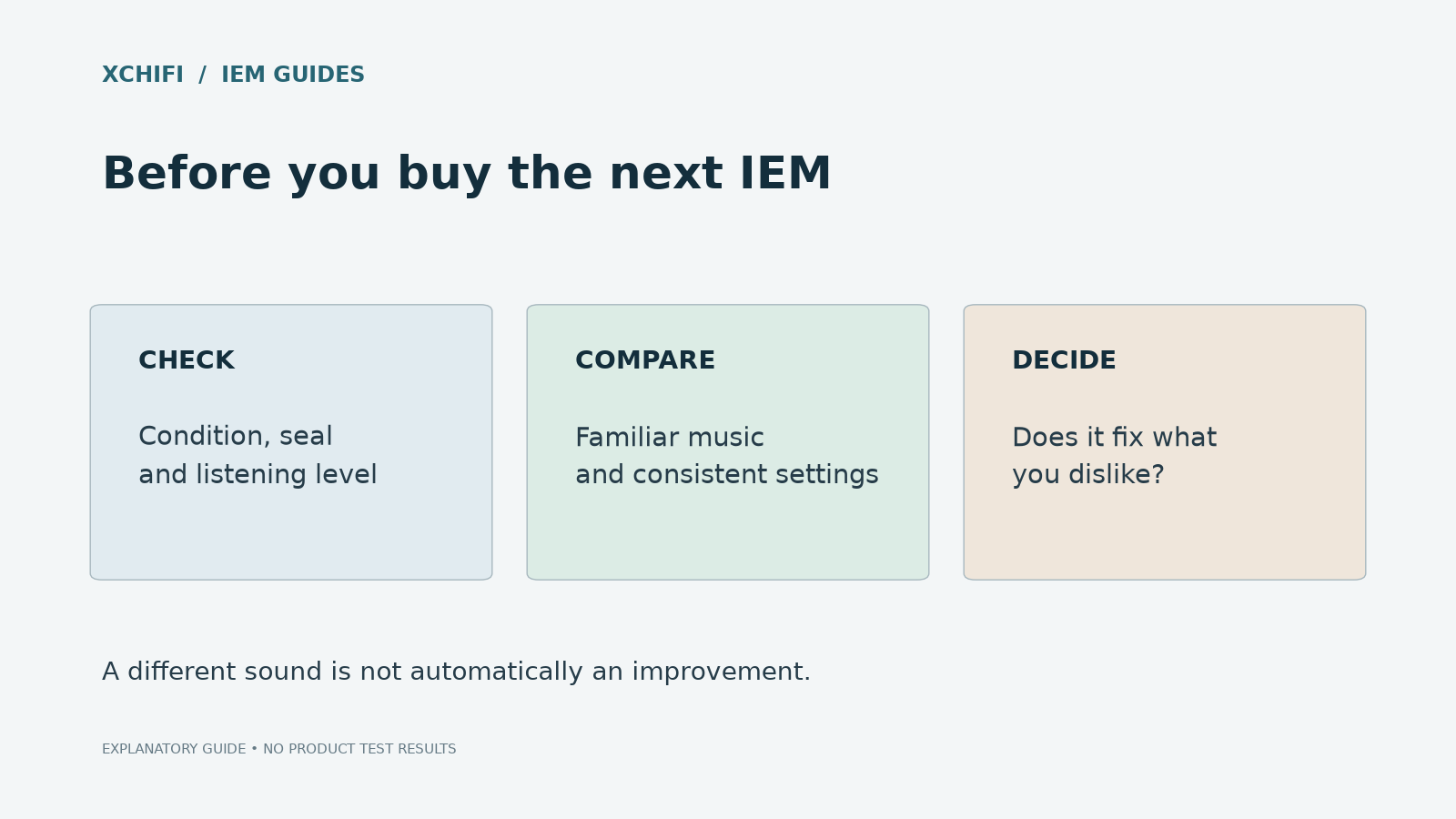
Compare the condition, not just the model
An older model and a worn-out sample are not the same thing. Blocked filters, damaged tips, loose connections or a faulty driver can change the result. Check both pairs and follow their maintenance instructions before comparing them.
Use the same source and familiar recordings. Aim for matched listening levels, keep processing consistent and obtain a secure seal with each pair. The best-fitting tips may differ between models. A slightly louder presentation can influence preference, so the same volume-slider position is not a reliable level match.
When is an upgrade worth it?
Name the problem first: discomfort, unwanted hiss, unreliable connectors, insufficient clean output or a tuning you no longer enjoy. Then ask whether the new earphone fixes it without introducing another compromise.
If your current IEM remains comfortable, reliable and enjoyable, keeping it is reasonable. If a newer one clearly suits you better, that is a reason to change. The launch calendar should not make the decision for you.
Cover photo: George Milton / Pexels. Listening lifestyle image.
1 thought on “Are New IEMs Always Better? Why Older Earphones Still Hold Up”
Comments are closed.