
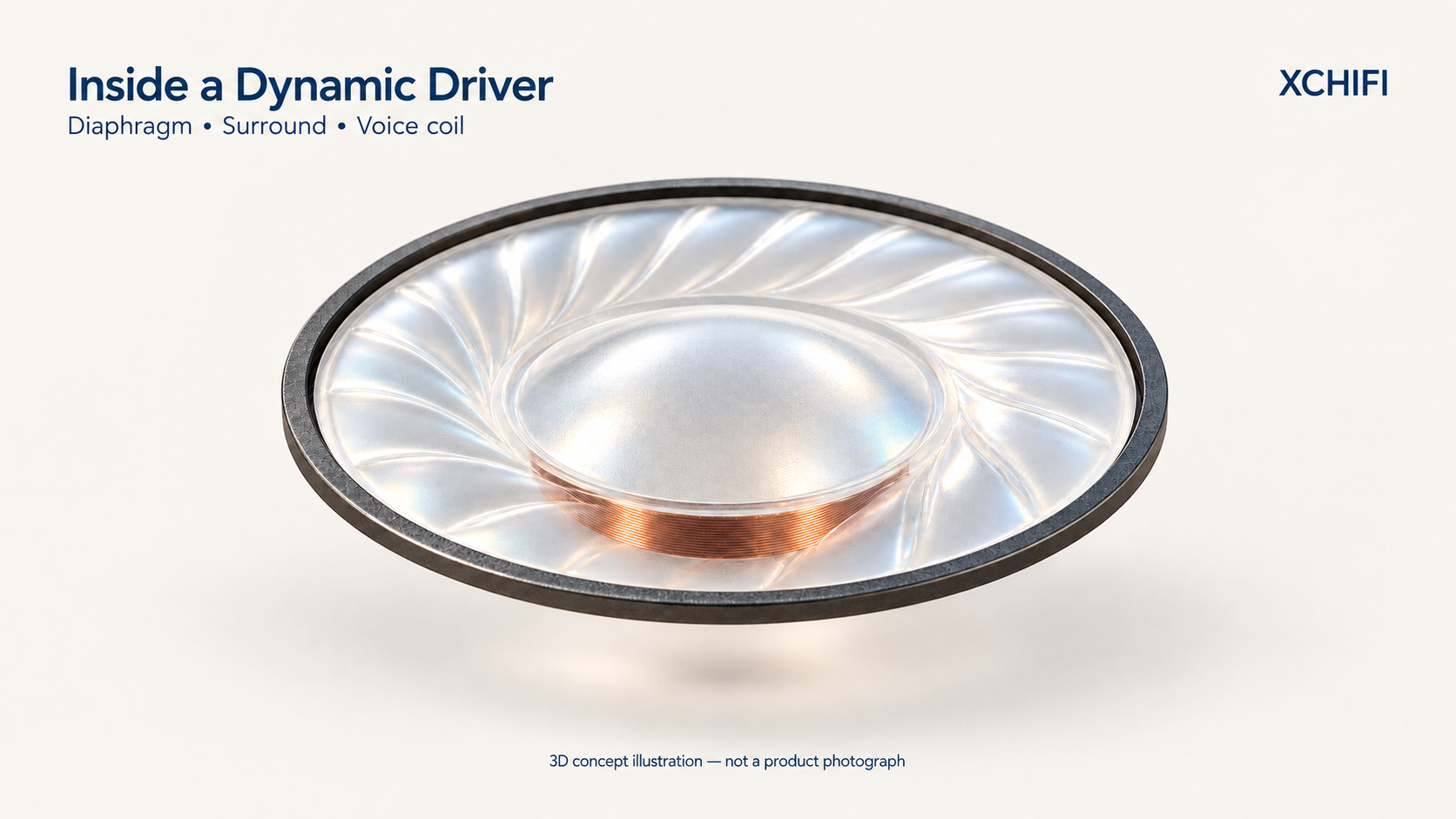
A bigger diaphragm offers more air-moving capacity. A smaller driver is easier to fit into a compact earphone. Neither size guarantees better sound. Here are the practical advantages and drawbacks for single-dynamic-driver IEMs.
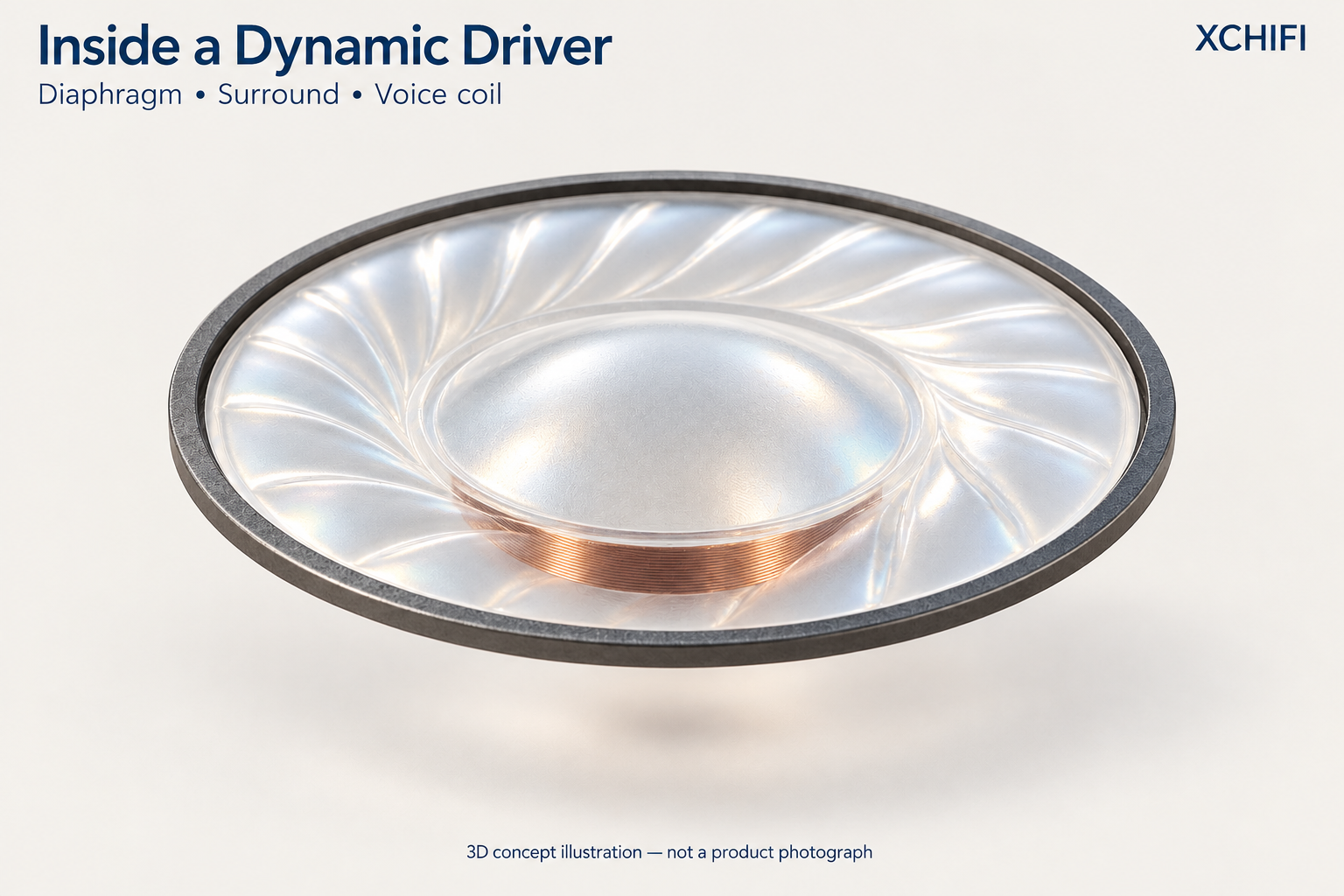
Bigger vs smaller IEM drivers: the pros and cons
The acoustic comparison below assumes a larger driver actually has more effective moving area, with other conditions comparable.
| Size | Advantages | Drawbacks |
|---|---|---|
| Larger diaphragm | Moves more air at the same excursion. Needs less travel for the same displaced volume, giving designers more room to meet demanding bass-output targets. | Takes up more space. A larger span needs suitable stiffness and damping to control resonances. Simply enlarging a diaphragm does not preserve its performance. |
| Smaller diaphragm | Fits more easily into a compact layout. A smaller span can help structural stiffness if material and thickness are comparable, though this alone does not determine treble quality. | Needs more travel to move the same amount of air. With the same maximum linear excursion, it has less displacement capacity and can reach its limit sooner on loud bass. |
The useful distinction is bass-output capacity versus packaging and structural trade-offs. It is not “big sounds muddy” or “small sounds fast.” Motor design, diaphragm construction, tuning and ear-tip seal still matter.
10mm vs 13mm: what changes?
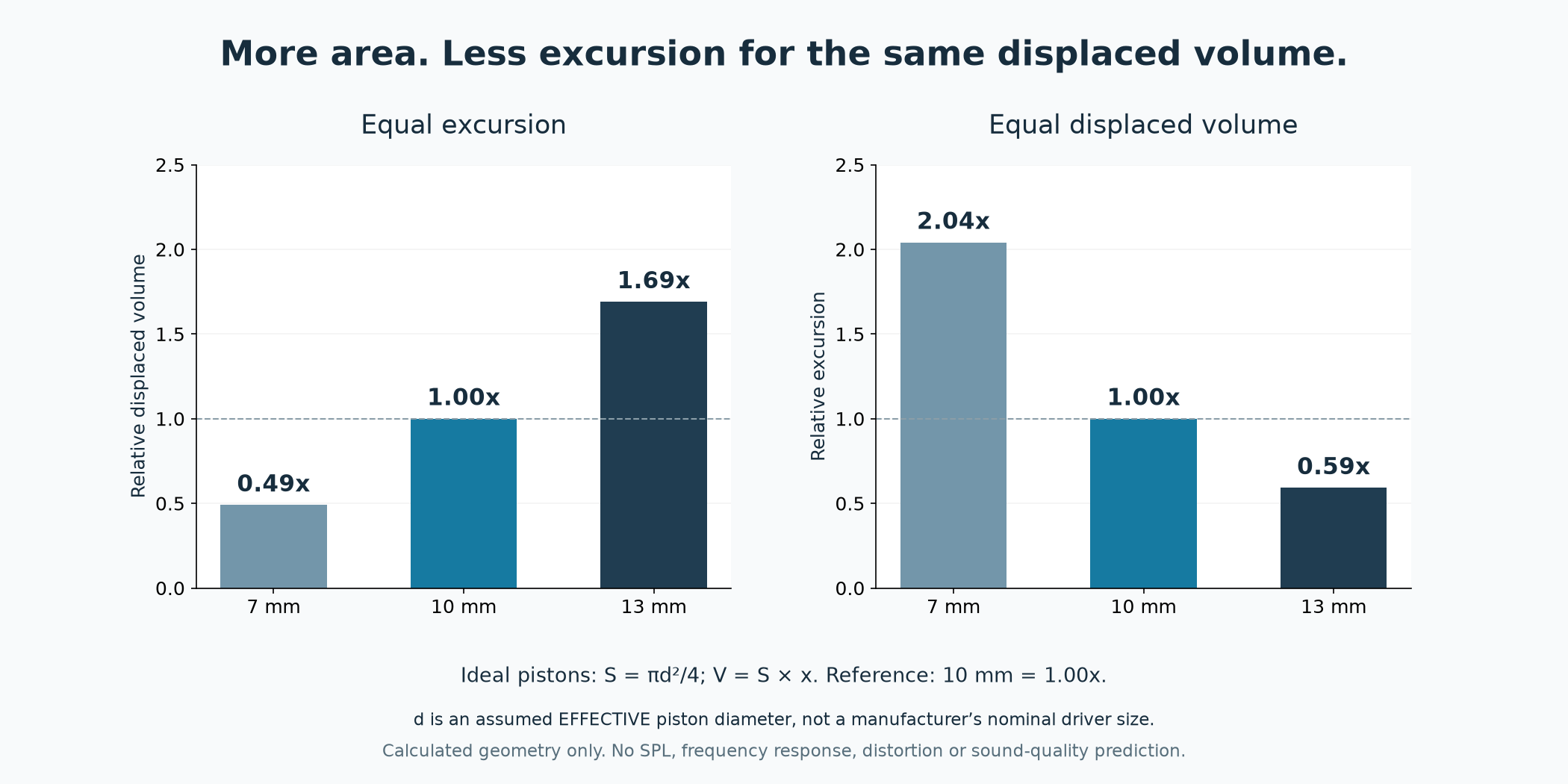
Imagine two pistons pushing air. The wider one does not need to travel as far to push the same amount.
For ideal 10mm and 13mm effective piston diameters, the 13mm version has 69% more area and needs about 41% less travel for the same displaced volume. That is extra design capacity—not 69% more bass in your music.
What is the best driver size for an IEM?
There is no universal best size. A well-designed small driver can deliver deep bass; a well-designed large driver can deliver clear treble. For example, Sennheiser uses a 7mm transducer in the IE 900—small size is not automatically a limitation on the intended listening experience.
- Buying an IEM? Choose comfortable fit, a good seal and tuning you enjoy. Do not choose by millimeters alone.
- Designing an IEM? Compare the space available, required bass output and distortion of candidate drivers in the intended shell. Treat 7.5–8.5mm, 9–10mm and 12–14mm as options to evaluate, not sound-quality grades.
Related: How to build an IEM with powerful bass.
Technical sources and calculation
Ideal piston area S = πd²/4; displaced volume V = S × x. These calculations do not predict a complete earphone’s frequency response or distortion.