
Published 19 September 2026 · XCHIFI price and industry analysis
Noble Audio Blade has a reported launch price equivalent to about US$11,924. That is roughly 12.84 iPhone 17 units at the US$929 US configuration price used below, before sales tax. Its price raises a reasonable question: how can a pair of earphones cost more than a stack of smartphones?
the useful explanation includes component and assembly costs, development spread across a smaller production run, distribution, service and premium positioning. None of those factors, alone, proves that the full price is justified. Noble’s actual bill of materials, total production volume and margin are not public in the sources we checked.
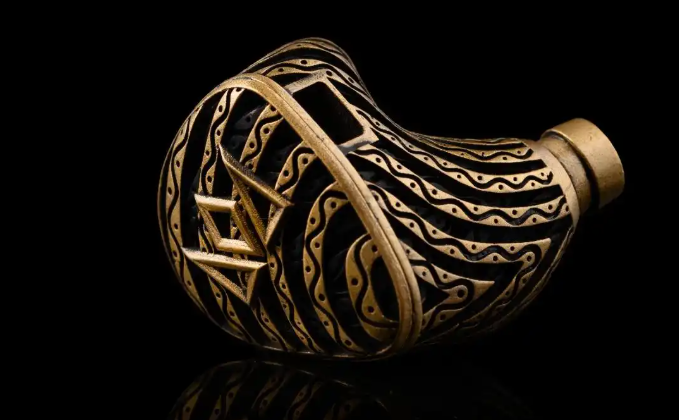
Noble Audio Blade price: why about US$11,924?
Headphone Club’s launch coverage reports the Chinese launch price and a Beijing introduction on 12 September 2026. Converted at the dated exchange-rate reference below, that price is approximately US$11,924. This is an indicative dollar equivalent, not a verified US retail offer.
| Comparison | Calculation | Result |
|---|---|---|
| Indicative US-dollar equivalent | Reported launch price converted at the dated reference rate | About US$11,924 |
| iPhone 17 256GB, US connect-later configuration | US$11,924 ÷ US$929 | About 12.84 phones before sales tax |
| Whole iPhone 17 purchases within that budget | 12 × US$929 = US$11,148 | 12 phones, about US$776 remaining before sales tax |
Dollar conversion reference: Exchange Rates UK, 18 September 2026 close. Amounts are rounded, indicative and not a bank quote or US MSRP. Phone benchmark: Apple US, iPhone 17 256GB, “Connect on your own later,” US$929, checked 19 September 2026. Phone totals exclude sales tax, trade-in, carrier discounts and accessories. This compares a converted regional earphone price with a US phone configuration, not two tax-equivalent local offers. Prices and exchange rates can change.
Doesn’t Apple spend money on research too?
Absolutely. Apple’s FY2025 Form 10-K reports US$34.55 billion in research and development and US$416.161 billion in total net sales. The R&D figure covers the whole company; it is not the development budget of one iPhone.
The comparison illustrates purchasing power, not relative engineering effort. A large product platform can spread common development, tooling and software costs across many sales. A specialized earphone project may recover its fixed spending through far fewer orders. A lower unit price does not mean that Apple did less research, and a higher earphone price does not mean that its maker did more.
First, separate manufacturing cost from retail price
A list of drivers is only one part of the cost. A useful cost model has four layers:
| Layer | What it can include | What we do not know about Blade |
|---|---|---|
| Per-pair production | Drivers, shells, crossover parts, acoustic parts, cable, connectors, assembly, testing, packaging and production losses | Supplier quotations, labor time and yield |
| Project investment | Design, prototypes, tuning iterations, tooling, measurement fixtures and validation | Development budget and the number of pairs used to recover it |
| Selling and support | Demonstration stock, distribution, retail service, freight, regional taxes, warranty and customer support | Channel contracts and regional cost allocation |
| Commercial positioning | Target profit and the price a particular audience will accept | Realized selling prices and actual profitability |
This framework explains why retail price can be much higher than the parts bill. It does not let us reverse-engineer Noble’s profit. A retailer’s gross margin also has to support its own rent, staff, demonstrations, inventory and service; it is not automatically net profit.
What do Blade’s drivers and materials actually tell us?
The launch statement reproduced by Headphone Club describes a 14-driver arrangement: four Sonion balanced armatures, eight Knowles balanced armatures and two super-magnetic planar units. It assigns the Sonion units to lower frequencies, the Knowles units to mid/high and ultra-high frequencies, and the planar units to the highest range. It also describes an open brass enclosure made using lost-wax casting and a PhaseWeave crossover system. These are published design descriptions, not XCHIFI measurements.
Are the Sonion and Knowles drivers necessarily off-the-shelf?
We cannot establish that from expected sales volume. Standard catalog parts, selected or matched variants, customer-specific assemblies and entirely new transducers are different levels of customization. Low final-product volume is not evidence that every component must be generic.
Knowles’ own multi-way driver documentation describes standard models alongside options for different sound signatures and integrated crossovers. A Knowles driver data sheet also lists custom assembly options. Those documents establish that customization has several forms; they do not identify Blade’s particular part numbers or purchasing arrangement.
Even a design built with catalog drivers requires integration. For a buyer, the meaningful question is whether the finished earphone delivers the desired sound, fit and consistency. Counting expensive-sounding components cannot answer that.
Why can a brass shell cost more than its raw metal?
Material weight alone leaves out the work needed to turn a design into repeatable finished parts. In a costing exercise, we would request separate quotes for tooling, casting, finishing, inspection and rejected parts. More elaborate geometry or cosmetic standards can increase the work per accepted shell. We have no Blade factory quote, so we cannot attach a defensible dollar amount to those steps.
Its metalwork can also have aesthetic and collectible value. That is a legitimate purchasing preference, but it should be discussed separately from an unmeasured claim of better sound.
Does the cable’s precious-metal description explain the price?
The launch materials describe a blend of 7N OCC copper, a gold/silver/platinum/palladium alloy, and a palladium-plated gold-silver alloy, with four strands and 256 wire cores. The names do not disclose the mass, alloy proportions, plating thickness or supplier cost.
Without those details, calculating the cable’s value from metal names would be speculation. Buyers can distinguish visible craftsmanship and handling preferences from claims about audible improvements. This article includes no controlled cable comparison.
Why are high-end IEMs so expensive when sales are small?
Fixed cost per pair = project fixed cost ÷ the number of saleable pairs over which it is recovered. The arithmetic is simple; predicting the denominator is difficult.
Consider an invented project with approximately US$44,779 in fixed development and launch costs. The following table is an illustration only, not an estimate of Noble’s spending, production or profitability.
| Pairs sold | Fixed cost allocated per pair |
|---|---|
| 200 | Approximately US$223.90 |
| 1,000 | Approximately US$44.78 |
| 5,000 | Approximately US$8.96 |
Parts, production labor, taxes, after-sales expenses and profit would still have to be considered. More sales do not guarantee lower retail prices either: the maker must choose to pass efficiency gains to buyers.
A niche product can be manufactured in repeatable batches. It is more precise to say that a small audience may limit economies of scale than to say such products cannot be mass-produced. The launch report mentions limited initial availability, which does not establish Blade’s lifetime production quantity.
Where do exhibitions, advertising and dealers fit?
For an audio business, exhibiting can involve booth space, demo equipment, international freight, flights, hotels and staff time. Photography, models or presenters may be part of a campaign. Advertising, review-sample logistics and local retail support can add further spending.
These are possible business expenses, not verified line items in Blade’s price. We found no public breakdown showing how much Noble allocated to any of them. Nor do we know how many distribution stages apply to a particular purchase.
Our assessment is that a smaller customer base makes a given fixed expense harder to recover. At the same time, exhibitions and dealers can provide useful audition opportunities, local support and a chance to compare fit before buying. Reducing a channel means finding another way to provide the services listeners still need.
Is an expensive IEM worth it?
Cost explanation and buying value are separate questions. A manufacturing process can be expensive without being important to your listening priorities. Equally, a listener may reasonably value design, craftsmanship or an unusual sound presentation.
- Define the improvement: what would change compared with your current earphones?
- Try the fit: shell comfort and a stable seal matter during actual use.
- Compare on your terms: use familiar music and comparable volume, rather than relying on a driver count.
- Check ownership costs: warranty coverage, repair routes, parts availability and return conditions.
- Separate evidence from enthusiasm: a launch description, an owner’s opinion and a controlled measurement answer different questions.
For a contrasting example at the affordable end, our MOONDROP CHU III vs CHU II analysis asks the same underlying question: does a new purchase solve a problem the listener actually has?
Watch: a reviewer perspective on rising IEM prices
For broader context, Precogvision discusses premium IEM pricing in the video below. This is an independent creator’s industry commentary, not a Blade review or evidence of Noble’s costs.
Why XCHIFI wants to start with a listener community
Our proposed approach begins with a shared brief: the listening style, fit, driver architecture, appearance and target price a group actually wants. Agreement on those priorities can reduce repeated redesign and avoid creating many versions with uncertain demand.
- Define demand: collect preferences and a realistic budget before committing to production.
- Make choices visible: explain the cost implications of the shell, drivers, cable and packaging.
- Validate the design: build and evaluate samples, then confirm the production plan and service obligations.
- Concentrate the batch: use confirmed orders to plan quantities and purchasing more accurately.
The goal is to reduce avoidable inventory, scattered promotion and duplicated work, leaving more of the budget for the things that group values. It is not a promise to reproduce Blade’s performance at a fraction of its price.
Community interest is also not the same as a paid order. Our planned concept uses 1,000 verified supporters as a trigger for feasibility review, not an automatic crowdfunding launch. Production would still depend on engineering, quotations, quality checks and a viable order plan. Creator commissions, if used, are a cost that must be budgeted rather than treated as free marketing.
Online configuration and community crowdfunding are future plans, not live ordering features. Today, you can share your preferred earphone design and target budget, or explore our OEM / ODM earphone services. This is the purpose of XCHIFI’s coverage: turn attention around new products into better-informed design choices.
Quick answers
What is the Noble Audio Blade price?
The reported Chinese launch price converts to about US$11,924 using the 18 September 2026 reference rate. It is not a confirmed US selling price.
Can driver counts reveal an earphone’s true cost?
No. Exact part numbers, order quantities, shell production, assembly, testing, yield, development and support all matter. We do not have Blade’s bill of materials.
Can community-designed earphones be more affordable?
They may reduce some demand uncertainty and overhead when a group agrees on a specification and enough orders materialize. Savings require a workable production plan and are not guaranteed.
Editorial scope: source-based price and business-model analysis, not a listening review or teardown. Product statements are attributed above; the numerical cost model is hypothetical. Sources checked 19 September 2026.