
MOONDROP CHU paint peeling can result from surface wear, weak coating adhesion, or moisture reaching the metal beneath a damaged coating. Sweat and repeated rubbing are plausible contributors, but a photograph cannot establish the cause. If your CHU is flaking, photograph the damage, keep it dry and contact the seller before attempting a repair. Sanding an assembled earphone is not a reliable fix.
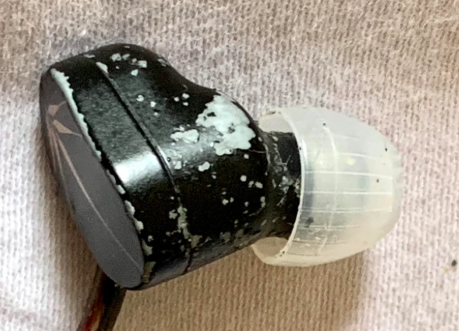
MOONDROP CHU coating flaking: what the owner reported
The r/headphones discussion describes coating flaking on the left earbud while the right remained fine. The owner also mentioned wearing the earphones to sleep and sleeping on the left side. That makes unequal contact and rubbing worth considering; it does not prove that sleeping caused the damage.
This article concerns the original MOONDROP CHU. It is not evidence that CHU II or CHU III has the same coating, failure rate or durability. Owner reports establish that a problem has occurred, but without the number of units sold and verified failures, they cannot establish how common it is across a brand.
Why does MOONDROP CHU paint peel?
MOONDROP’s official CHU specifications identify a zinc-alloy body and a cast external cavity. They do not disclose the exact alloy grade, complete coating stack or factory adhesion results. The following are possible mechanisms, not a diagnosis of this particular pair.
1. Rubbing and small chips can start at contact points
Repeated contact with skin, bedding or other objects can wear a finish. A scratch or small chip can expose an edge that later flakes. Different contact on the two ears could explain uneven wear, although differences in preparation or coating application are also possible.
2. The coating depends on the surface beneath it
A durable finish needs suitable cleaning, preparation and curing. Contamination or insufficient adhesion can allow a coating to separate even when the metal body remains intact. Zinc is not automatically a poor substrate: the International Zinc Association’s finishing guide lists several successful finishing methods and stresses surface quality for thin decorative coatings.
3. Moisture beneath a damaged coating can make failure worse
Sweat brings moisture and salts into repeated contact with an earphone. Where the protective layer has been breached, trapped moisture can contribute to corrosion. Corrosion products at an interface may then lift or loosen the coating. Nordic Galvanizers describes this general paint-lifting mechanism in its technical handbook; that handbook concerns zinc-coated steel, not laboratory testing of CHU shells.
White or pale residue could include corrosion products, coating layers or surface deposits. Calling it “zinc oxide” from a photo would be more precise than the evidence allows. Likewise, sweat acidity alone is not a complete explanation: exposure time, salts, drying, rubbing and the finish itself all matter.
Why does MOONDROP use zinc alloy instead of another material?
The commercial logic is understandable: casting can make a compact, shaped metal housing repeatedly once tooling is available. MOONDROP describes the CHU’s cast shell in terms of durability and texture. Cost and manufacturing efficiency are reasonable engineering considerations, but the company has not published its internal material-selection calculation.
In a typical pressure-die-casting process, molten alloy fills a reusable metal die, cools and is ejected. Gates and any flash must be removed before finishing. This does not mean all cast shells have poor precision: die design, process control and inspection determine the result. The International Zinc Association’s publications discuss zinc alloys as materials for economical, complex cast components.
There are trade-offs. Zinc alloys are relatively dense, so geometry and wall thickness matter to comfort. A coating adds colour and surface protection, but it becomes another part of the product that must withstand handling and skin contact. Low manufacturing cost alone does not establish that a finish will fail.
It is also inaccurate to say zinc must always be spray-painted. The IZA guide lists electroplating, electropainting, powder coating and wet painting, and notes that many zinc castings are used uncoated in suitable environments. These are different options from the familiar decorative anodizing used on aluminium; each needs a process appropriate to its substrate and intended use.
Does inexpensive casting explain the price?
Tooling is a fixed investment; each additional shell adds material, machine time, finishing and inspection costs. More units spread the tooling bill across a larger production run. That is one reason a shaped metal shell can be affordable at scale.
Illustration only: if a mould cost approximately US$2,985–4,478 and produced 1,000 usable pairs, tooling alone would contribute approximately US$2.99–4.48 per pair. At 10,000 usable pairs it would contribute approximately US$0.30–0.45. This assumes the same tooling covers a complete pair and excludes maintenance, rejects and all recurring costs. These figures are hypothetical inputs, not MOONDROP quotations. Dollar equivalents are rounded using the 18 September 2026 exchange-rate reference.
There is no verified CHU supplier invoice here to support a claim that its finished shells cost “about US$1.49 per pair.” Raw castings, finished matched shells and a complete retail earphone are different cost items. The useful question is whether the chosen finish and quality checks deliver adequate durability at the target price.
How to deal with CHU paint peeling
- Document it first. Photograph both shells, the affected area and the order details. Ask the seller or MOONDROP support whether inspection, replacement or repair is available under the policy applicable to your purchase.
- Keep the shell clean and dry. Gently wipe the exterior with a soft, dry cloth after use. Let it dry before storing it. Do not soak the earphone or introduce liquid into the nozzle, vents or cable entry.
- Avoid picking at the coating. Pulling off a loose edge can enlarge the damaged area. If flakes are shedding near the ear tip, or the surface becomes rough or uncomfortable, pause use and arrange service.
- Check sound changes separately. Reduced volume or imbalance may involve a filter, blockage, moisture or another fault. External paint loss alone does not identify the audio problem. Do not push debris through a nozzle filter.
Should you sand the paint off?
We do not recommend sanding an assembled CHU. Abrasive dust and paint fragments can enter the sound outlet or vents. Sanding can also damage seams, remove markings or alter surfaces that need to fit together. A bare shell is not the same as a restored protective finish.
Professional refinishing would require protecting or removing sensitive parts, preparing the substrate and choosing a compatible finish for repeated skin contact. That may cost more than replacing a budget earphone. Household nail polish, solvent stripping or a quick spray coat is not a validated repair method for this product. Ask about service before modifying it.
MOONDROP CHU paint peeling: common questions
Is it rust?
Zinc corrosion is different from the reddish rust associated with iron. Pale corrosion products are possible, but a photo cannot confirm their composition or distinguish them from coating residue.
Will peeling paint change the sound?
Cosmetic damage to an exterior finish does not by itself prove a change in sound. Loose debris, a blocked vent or filter, a damaged seal, or moisture entering the assembly could matter. Diagnose an audible change separately.
Can I keep using it?
Inspect the condition rather than relying on appearance alone. Stop using a shell that sheds flakes against your ear, has sharp or rough areas, causes irritation or shows signs of liquid ingress. Ask the seller to assess it.
Does this also apply to CHU II and CHU III?
Painted metal housings can share general wear mechanisms, but this original-CHU report does not establish the performance of a later model. For their listed differences, see our CHU III vs CHU II analysis.
Is a zinc-alloy earphone necessarily a bad choice?
No. Judge fit, finish quality, repair options and ownership experience alongside sound. Material names alone cannot tell you how well the whole product is made.
What this means for community-designed earphones
For XCHIFI’s planned community design platform, durability should be part of the design brief: shell weight, contact surfaces, coating adhesion, sweat resistance and serviceability deserve attention alongside drivers and tuning. Grouping demand may help spread development costs; it should not remove validation work. Share the ownership problem you want a design to solve through our project inquiry form, or explore our OEM / ODM services.
Editorial scope: source-based explanation and practical ownership guidance, not a teardown, chemical analysis or measured failure-rate study. Manufacturer specifications, the linked owner report and general materials references are distinguished above.