
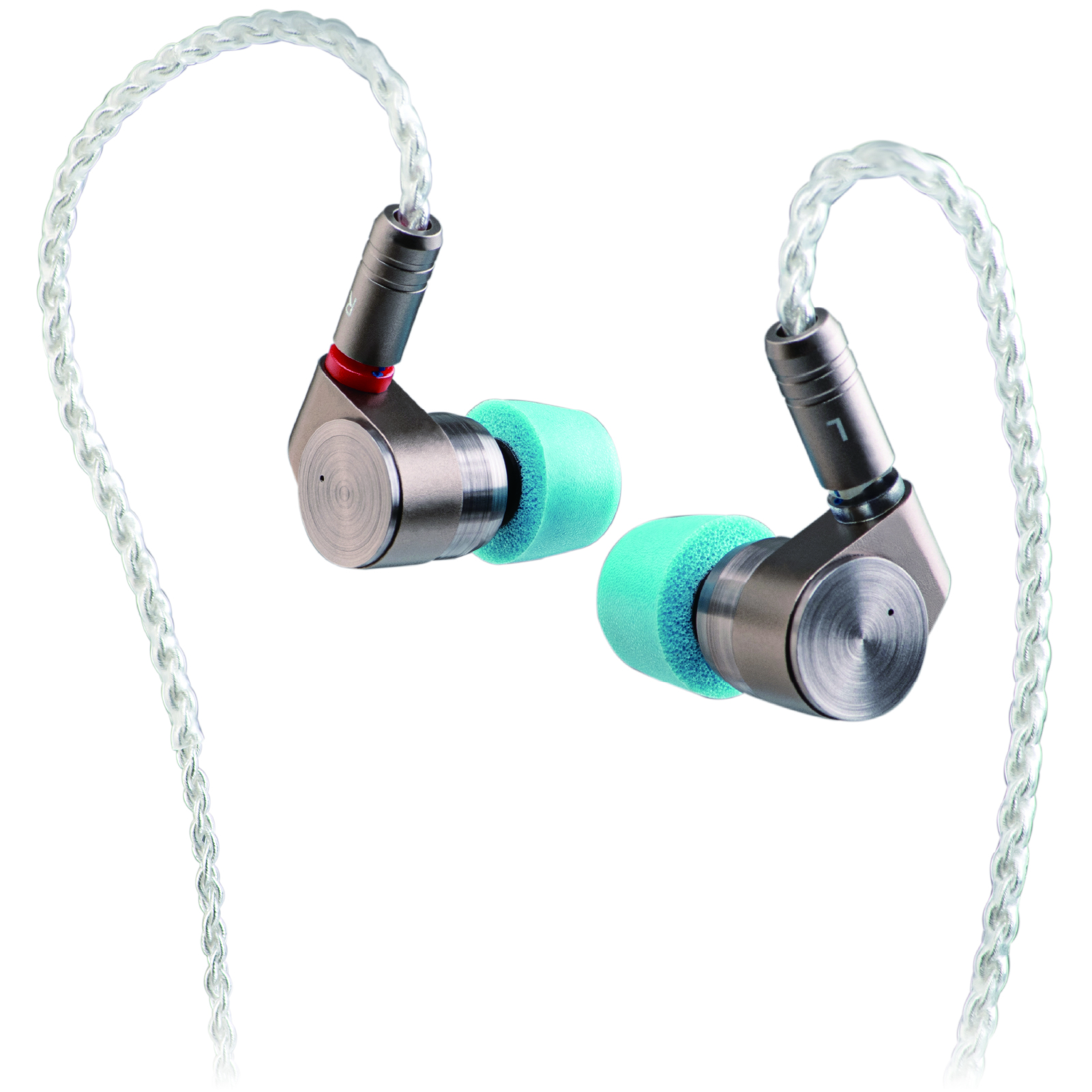
Choose the finished earphone, not the driver label. A planar IEM can sound excellent. So can a dynamic-driver IEM. Neither technology guarantees the bass, vocals or comfort you want.
What is physically different?
A conventional dynamic driver uses a voice coil attached to a diaphragm. In a planar magnetic driver, conductive traces on a thin diaphragm interact with a magnetic field. The structures distribute driving force differently. Audeze’s technology explanation describes the planar approach; its product claims should not be treated as proof that every planar beats every dynamic design.
Does planar mean more detail?
Not automatically. Treble balance can make an earphone seem clearer—or harsher. Distortion, resonances, fit and recording quality also matter. A thin diaphragm alone does not tell you how a complete IEM will sound.
Does dynamic mean better bass?
Also no. Bass depends on tuning, seal, acoustic loading and the output the driver can deliver without excessive distortion. A planar can have strong bass; a dynamic IEM can have restrained bass. Listen for whether bass stays clear without covering voices.
What should you check?
- Comfort: shell shape and nozzle fit over a normal listening session.
- Tuning: familiar voices, cymbals and bass lines at comparable volume.
- Source needs: the actual model’s sensitivity and impedance, not a blanket rule about planars.
If two models are both comfortable, choose the balance you enjoy. Do not pay extra just for a driver category.
Related: Does a bigger dynamic driver sound better? and Do your IEMs need a DAC?