
SOURCE 03 · TRANSDUCERS · 03 / 17
Introduction to Electroacoustic Transducers
A beginner-friendly IEM adaptation of electroacoustic transducers: dynamic, balanced-armature, planar and hybrid drivers, plus the specifications that matter.
3.1 IEM transducer families
An IEM driver converts electrical energy into controlled mechanical motion. Useful comparison points are sensitivity, bandwidth, distortion, excursion, impedance, size and acoustic loading.
3.2 Electrodynamic, balanced-armature and planar conversion
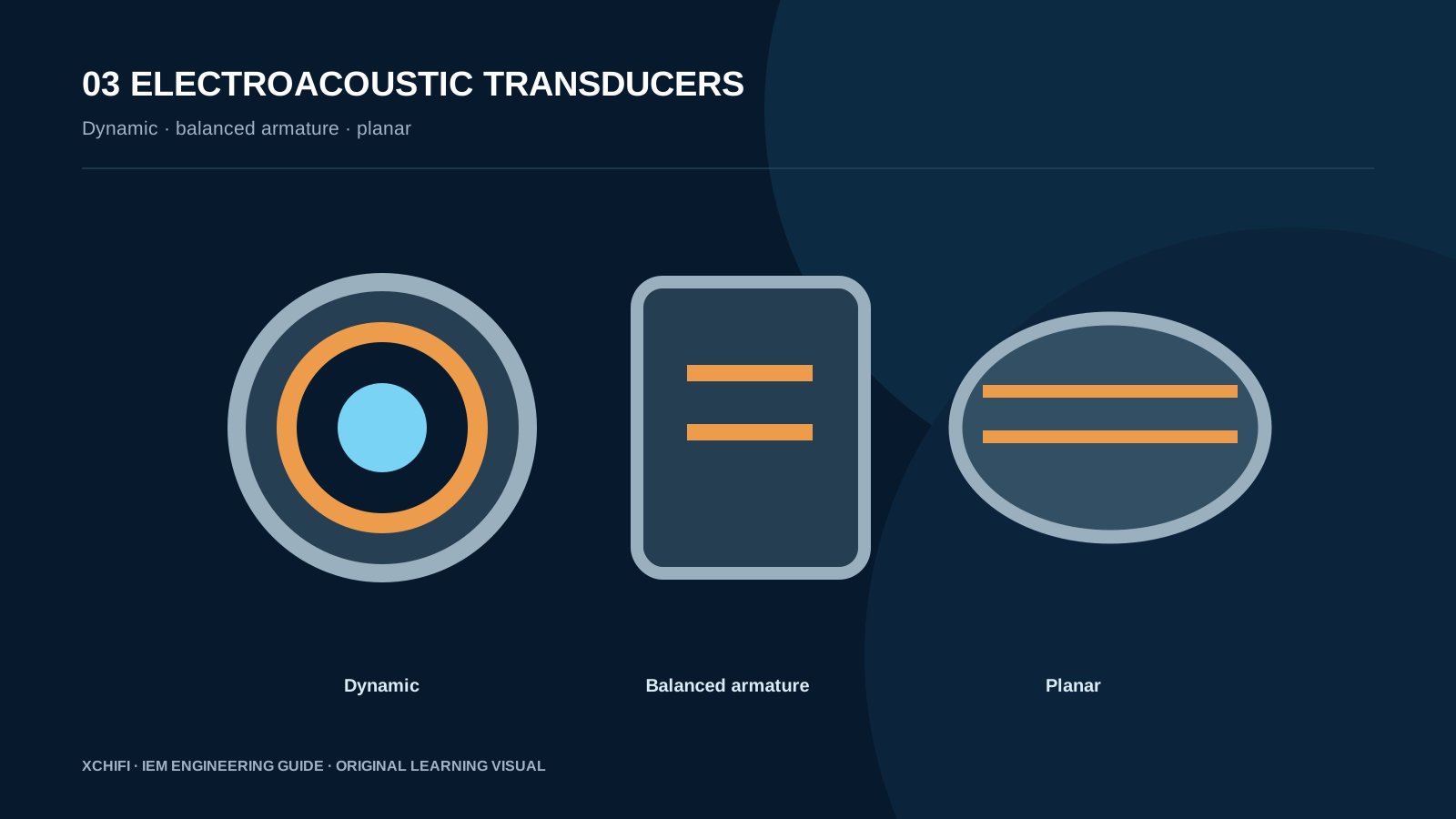
A dynamic driver uses a coil and magnet to move a diaphragm. A balanced armature feeds sound through a small port. A planar driver uses conductive traces spread over a thin film. Each offers trade-offs, not a guaranteed sound signature.
3.3 Key performance metrics
Combining drivers adds options but also demands matching of level, phase, timing and acoustic path. More drivers are a parts list, not a sound-quality score.
3.4 Hybrid integration
Sensitivity, impedance, bandwidth, distortion and maximum safe output are the practical specifications that connect a driver type to a finished IEM.