
SOURCE 14 · ANC · 09 / 17
Active Noise Control (ANC) Principles
A rewritten ANC-principles chapter for IEMs: feedforward, feedback, hybrid systems, phase, delay and passive isolation.
14.1 Feedforward, feedback and hybrid ANC
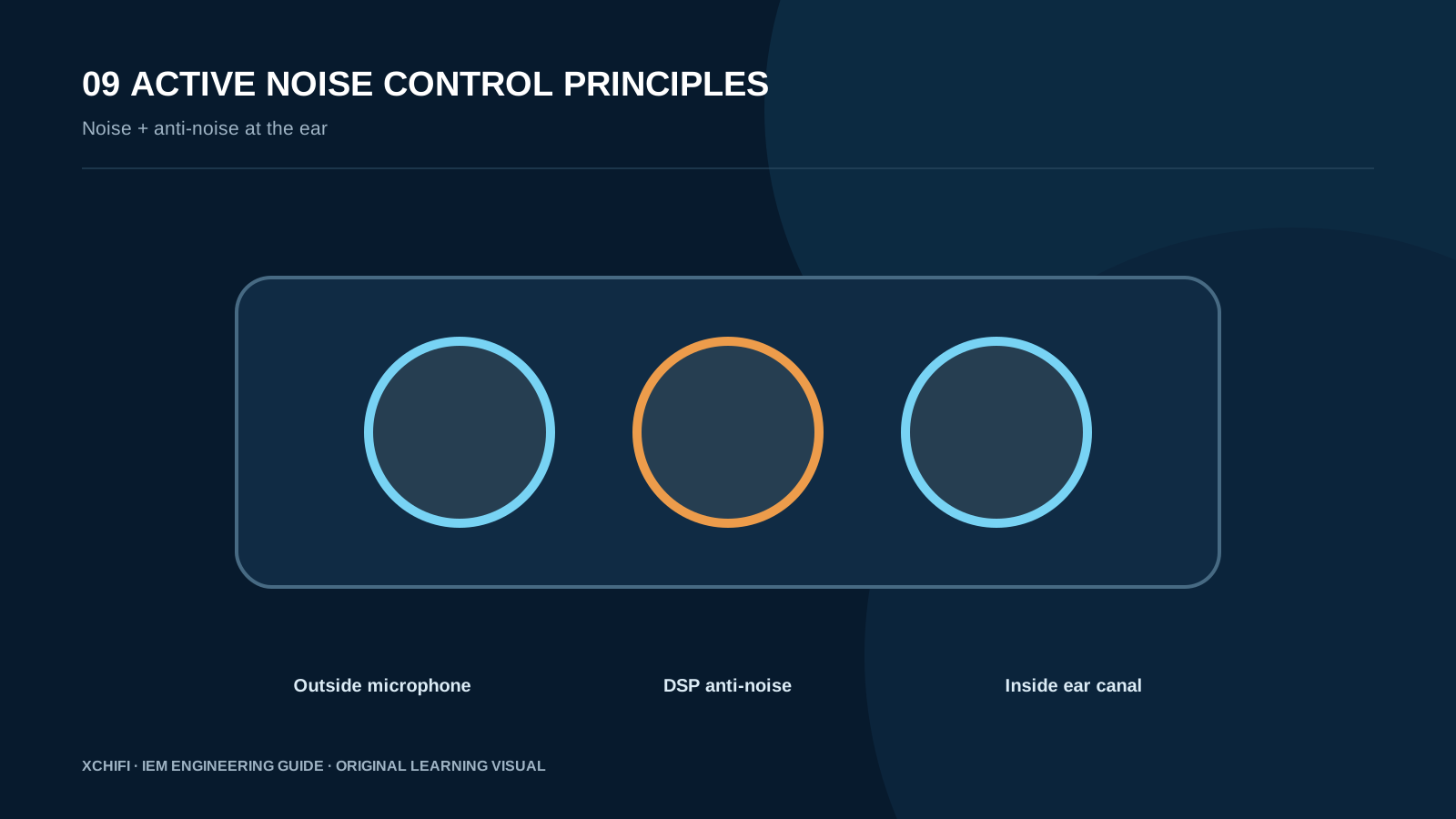
Microphones measure unwanted sound, an algorithm estimates an opposite signal and the speaker plays it into the ear canal. Accurate timing and amplitude reduce the unwanted pressure.
14.2 Adaptive control and FxLMS
Feedforward uses an outside microphone; feedback uses an inside microphone; hybrid combines them. Each changes what the system can sense and how difficult stability becomes.
14.3 Secondary-path modelling
Sensing, calculating and playing take time. ANC is therefore strongest for steady low-frequency noise such as engines and ventilation.
14.4 Error-microphone placement
Tips, seal and shell block sound without power. Better isolation reduces ANC workload and improves real use against speech and higher-frequency noise.
14.5 ANC stability and passive isolation
Poor control can create artefacts, pressure feeling or oscillation. The goal is consistent reduction without damaging music or calls.
14.6 ANC design summary
FxLMS-style control adapts an anti-noise filter using an error microphone. Its success depends on modelling the secondary acoustic path.