
SOURCE 15 · ANC SYSTEMS · 10 / 17
ANC System Design & Implementation
Practical ANC architecture for IEMs: secondary path, adaptive behaviour, microphone placement, latency and validation.
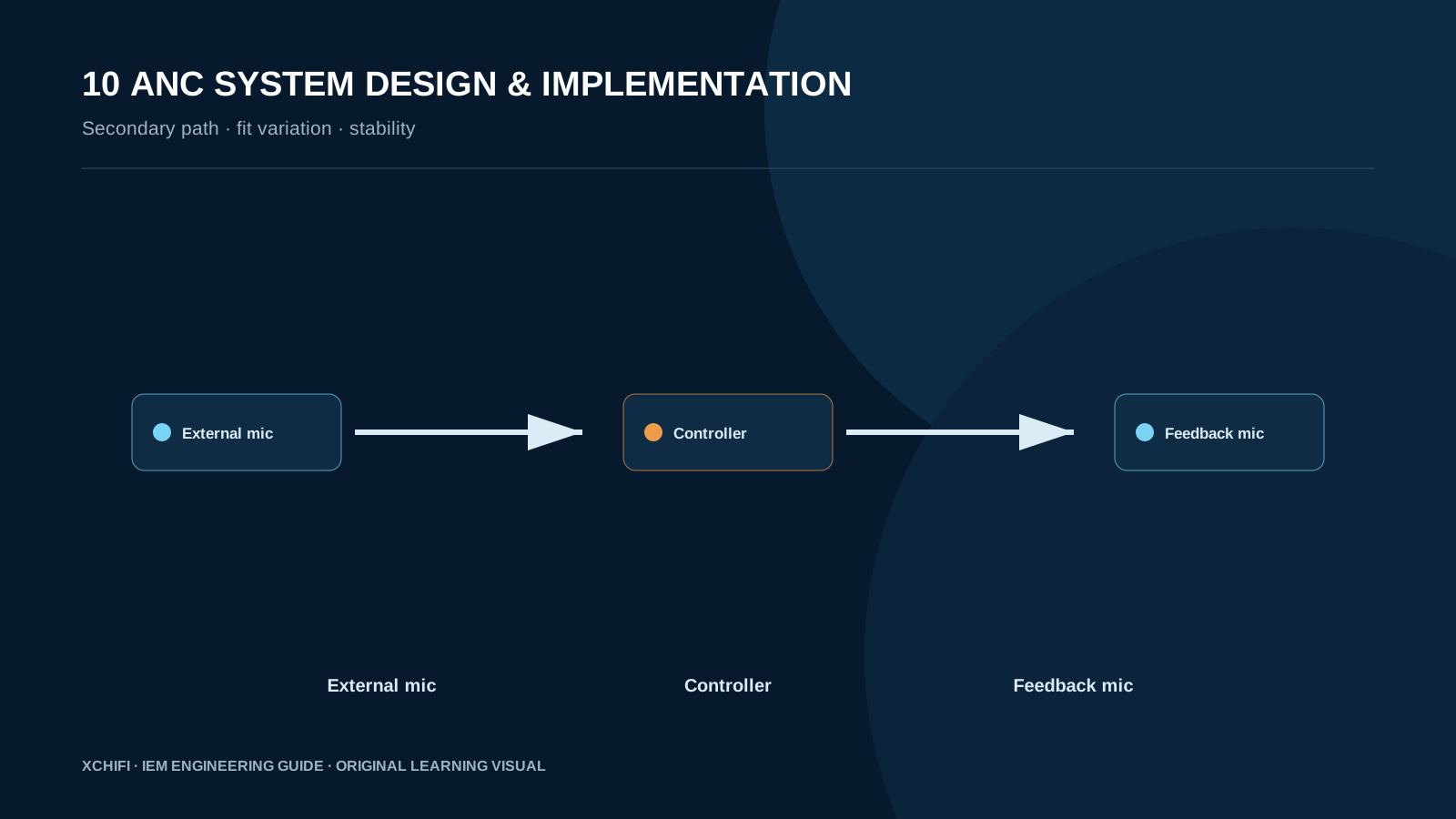
15.1 Analogue, digital and hybrid ANC
The algorithm output travels through driver, nozzle, tip and ear cavity before reaching an internal microphone. This route must be estimated or measured for the controller to work predictably.
15.2 Adaptive-filter implementation
Different ears and insertion depths change the secondary path. Adaptive filters and controlled acoustics help ANC remain useful across people.
15.3 Real-time latency management
External microphones need wind and handling-noise control. Internal microphones need moisture and wax protection. Both affect music transparency and calls.
15.4 Microphone, shell and fit integration
Validate reduction, music quality, wind behaviour, battery use, pressure feeling, transitions and stability. One laboratory number is not a product.
15.5 Consumer-IEM validation
Blocked microphones, low battery and mode switching must produce predictable behaviour rather than sudden tonal changes.
15.6 ANC system validation
Analog systems can be low latency; digital systems offer control and adaptation; hybrid architectures combine outside and inside microphones but require careful integration.