
SOURCE 09–10 · DIGITAL AUDIO · 07 / 17
Digital Audio Interfaces & Signal Fundamentals
An IEM-oriented version of digital interfaces and signal processing: sampling, quantisation, USB audio, DACs and source compatibility.
9.1 Digital interfaces: I2S, TDM and USB Audio
Sample rate sets the represented frequency range and bit depth affects available resolution and dynamic range. They matter, but do not replace good fit and acoustic tuning.
10.1 Sampling and the Nyquist limit
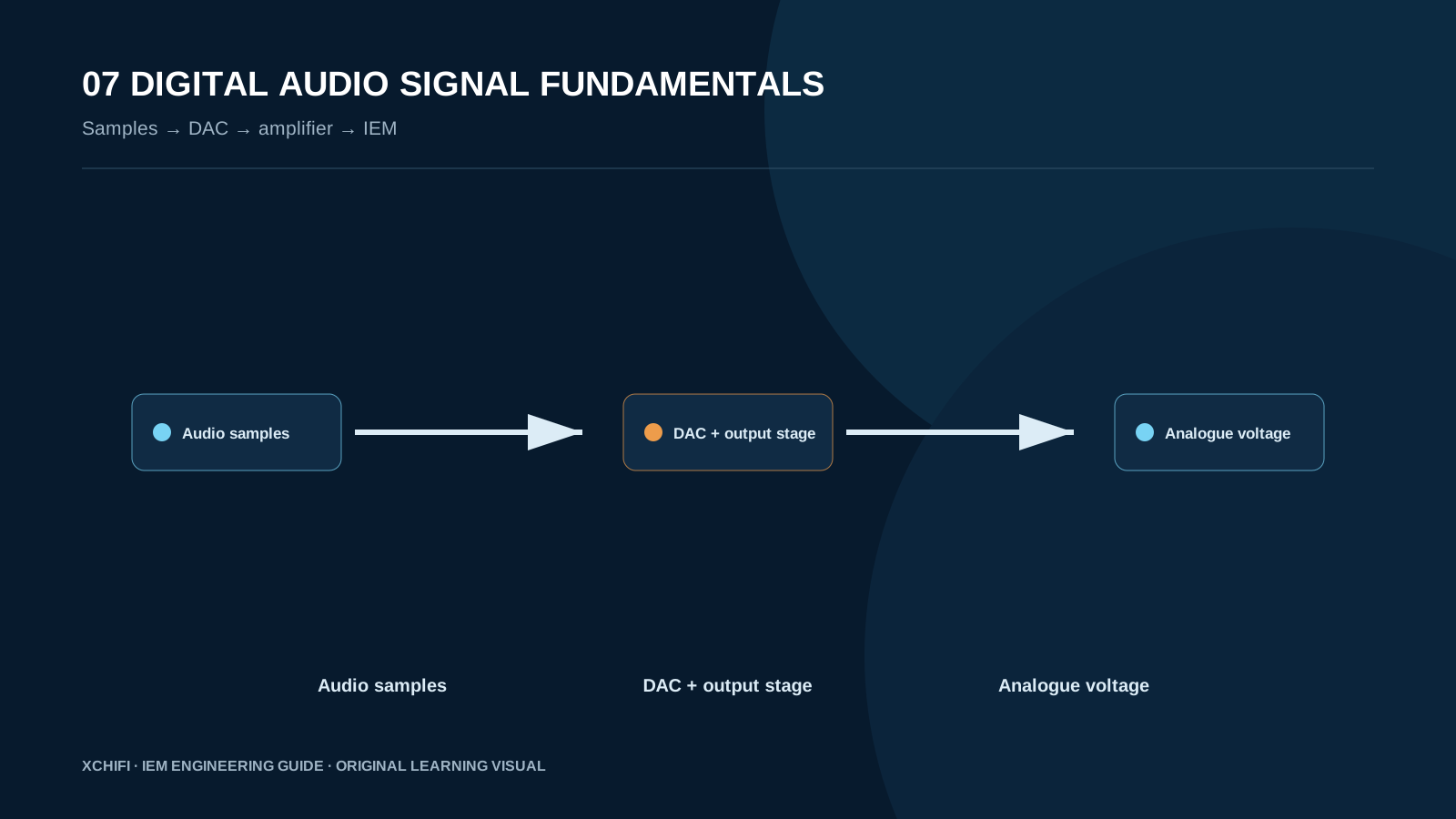
A DAC rebuilds the analogue voltage. A clean source needs low noise, adequate headroom and stable behaviour across the IEM impedance.
10.2 Anti-alias filtering and quantisation
A USB-C design may include DAC, amplifier, power management and DSP. It can make tuning more consistent, but adds firmware and compatibility responsibilities.
10.3 Dynamic range, SNR and usable source performance
Sensitive IEMs can reveal source hiss. Complex impedance may react to a high-output-impedance source. Check the full chain before attributing a difference to a cable.
10.4 USB-C IEM signal path
I2S, TDM and USB Audio move data between parts. Correct clocking avoids dropouts and unwanted conversion; it does not substitute for proper acoustic tuning.