
SOURCE 07 · IEM DESIGN · 06 / 17
IEM Acoustic Design
The earphone-design chapter rebuilt for IEMs: fit, leakage, front and rear chambers, vents, filters and target curves.
7.1 IEM type and acoustic architecture
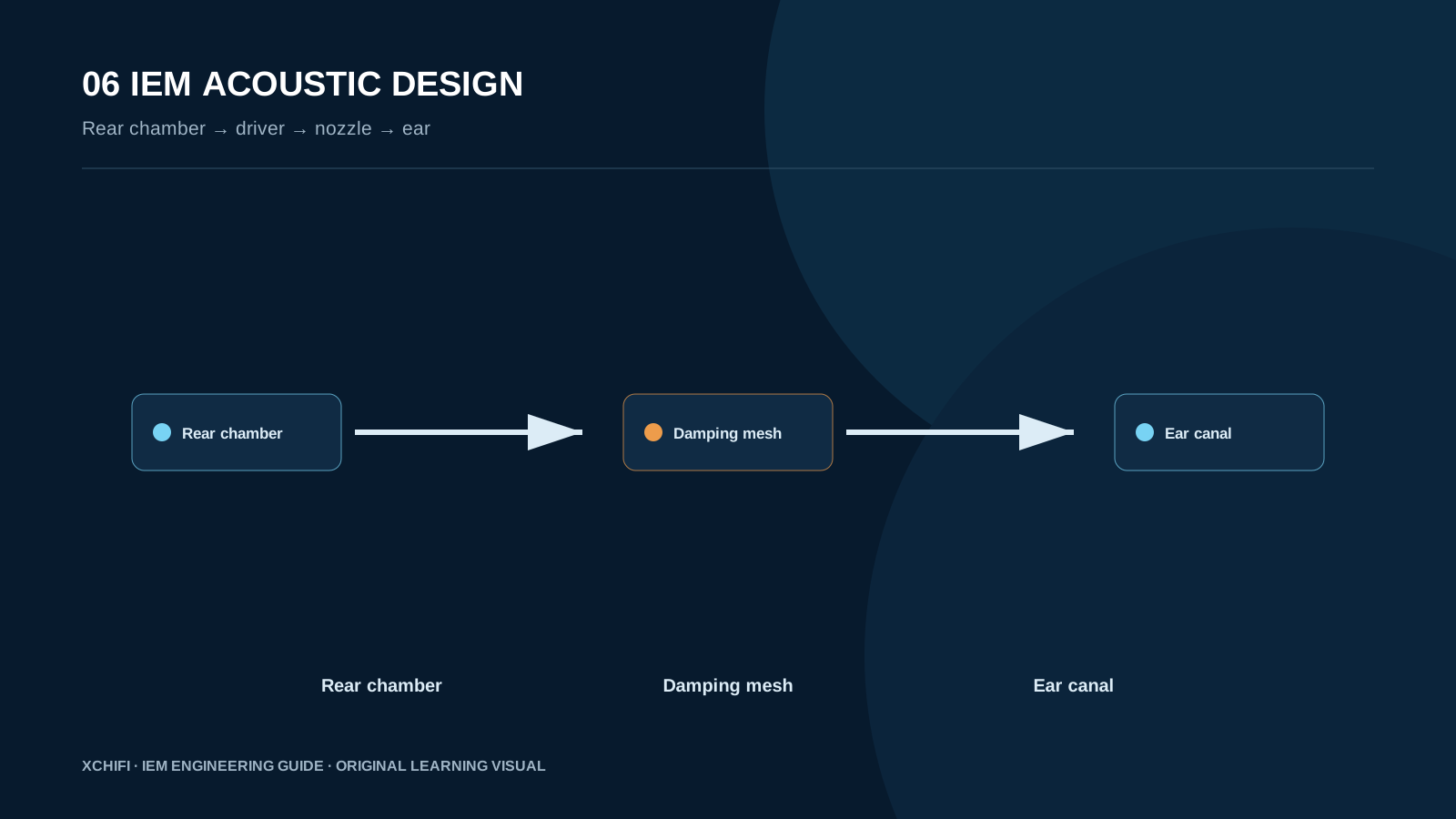
Driver, chambers, bore, nozzle and ear canal all add acoustic mass, compliance or resistance. Together they shape bass, upper-midrange gain, treble resonances and pressure feeling.
7.2 Frequency-response targets
A leak lets low-frequency pressure escape. Tip material, size and shell angle are therefore part of tuning, not only comfort.
7.3 Leakage and wearing condition
Bore dimensions and resistive parts control resonances and protect the driver. Small changes in flow resistance can be audible, so these must be production-controlled.
7.4 Passive isolation and the ANC context
A vent can adjust damping and pressure relief while reducing isolation. It must be chosen for the intended product, not used as a decorative hole.
7.5 IEM acoustic system summary
Published targets help teams communicate, but they do not replace a defined listener and use case.
7.6 IEM acoustic system summary
In-ear, open and sealed systems behave differently. For IEMs, target response, leakage and insertion are a single design problem.