
SOURCE 11–13 · DSP · 08 / 17
Digital Filters, EQ & Dynamic Processing
A practical rewrite of filters, equalisation and dynamic-range processing for IEM listeners and creators.
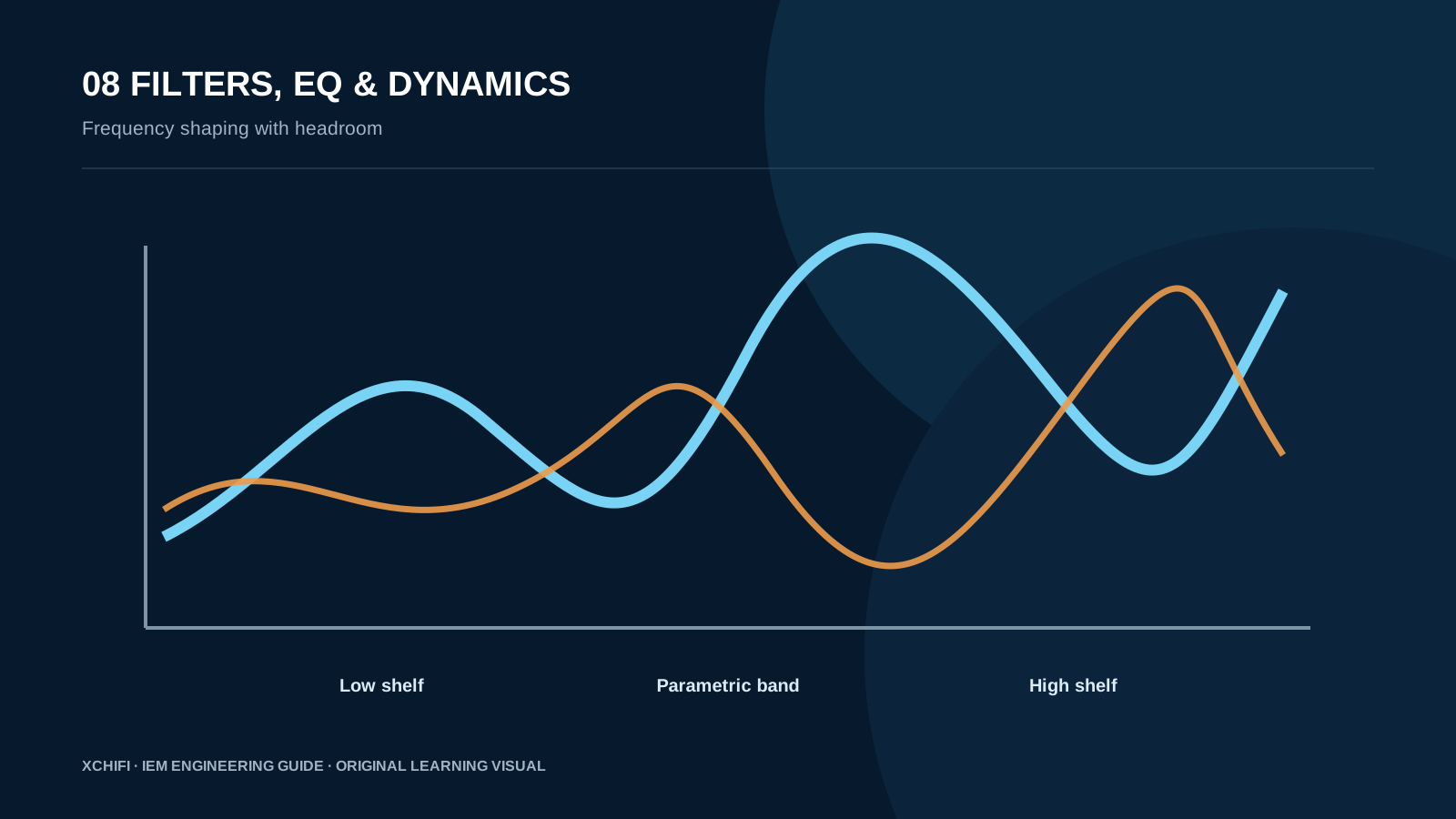
11.1 FIR and IIR filter choices
High-pass, low-pass, shelving and peak filters reshape selected frequency ranges. The useful choice depends on the problem, not a universal claim about filter types.
12.1 Graphic and parametric EQ
A band has frequency, gain and Q. It can reduce a narrow resonance or reshape a broad region. Start small and leave headroom for boosts.
12.2 Dynamic EQ and loudness compensation
It cannot create clean bass when a driver runs out of excursion, remove fit-dependent variation, or make two different systems identical in every condition. Large boosts can raise distortion or clipping.
12.3 Compression, limiting and headroom
Compression and limiting can help a USB-C DSP product behave consistently, but overuse can flatten impact and make music tiring.
12.4 Processing for the intended listener
FIR filters can offer predictable response at the cost of computation and delay; IIR filters are efficient but need careful stability control. Choose by product need.